2026年伊朗最佳VPN:如何安全绕过互联网审查
伊朗的互联网自由评分仅为16/100。了解哪些VPN有效、如何安全安装,以及2026年绕过审查的实用步骤。

2026年伊朗最佳VPN:如何安全绕过互联网审查
Iran maintains one of the world's most restrictive internet environments, with a Freedom House 互联网自由 Score of just 16/100—classified as "Not Free." Social media platforms, news sites, messaging apps, and VPN websites themselves are routinely blocked. Yet millions of Iranians continue seeking ways to access uncensored information and communicate freely. A VPN for Iran remains the most practical tool for bypassing these restrictions, though using one requires understanding both technical setup and real-world risks.
要点总结
| 问题 | 回答 |
|---|---|
| What's Iran's 互联网自由 status? | Iran scores 16/100 on the Freedom House 互联网自由 Index, with heavy restrictions on 社交媒体, news, messaging apps, and VPNs themselves. |
| Which VPNs actually work in Iran? | NordVPN (with 混淆的 servers), ExpressVPN, and Mullvad are among the most reliable options based on user reports and independent reviews. |
| Why do standard VPNs fail in Iran? | Iran's government uses 深度包检测 (DPI) technology to detect and block VPN流量 patterns. 混淆的 protocols and stealth features are essential. |
| Is using a VPN legal in Iran? | VPN use exists in a legal gray area. While not explicitly criminalized for all users, unauthorized VPNs are restricted. Use caution and understand the risks before installing. |
| What's the best protocol for Iran? | 混淆的 OpenVPN and WireGuard with 混淆 are most effective at evading DPI detection compared to standard protocols. |
| Should I install a VPN before traveling to Iran? | Yes. Install and test your VPN on your home network before arriving. Once in Iran, downloading VPN apps or accessing VPN websites becomes significantly harder. |
| How much do Iran-friendly VPNs cost? | Mullvad charges €5/month ($5.94 USD) with no long-term commitment. Check individual provider websites for current pricing on other services. |
1. 了解2026年伊朗的互联网审查
Iran's approach to internet control has evolved significantly. The country no longer relies solely on blocking specific websites—instead, authorities employ sophisticated 深度包检测 (DPI) technology that analyzes network traffic patterns to identify and throttle VPN连接s. Recent developments underscore the severity: in early 2026, Iran experienced widespread internet blackouts affecting millions of citizens, described by experts as a "trial of digital sovereignty."
The Iranian regime has made clear that internet control is a long-term strategy. According to Chatham House, Iran is entering "a new age of digital isolation" as the government advances plans to "retire" access to the international internet entirely. Understanding this context is crucial: a VPN isn't just a convenience tool in Iran—it's increasingly a necessity for accessing global information, and the technical barriers to using one are rising.
伊朗审查系统的工作原理
Iran's internet filtering operates through multiple layers. At the gateway level, the government controls access through state-owned internet service providers. When you attempt to visit a blocked website, your request is intercepted and denied. But the real sophistication lies in DPI technology, which inspects the content and metadata of every packet of data flowing through Iranian networks. This allows authorities to identify VPN流量 by its distinctive patterns—even if the data is encrypted.
- DNS filtering: Blocked domains are removed from DNS resolution, making websites unreachable even if you know their IP地址.
- IP-based blocking: Known VPN服务器 IP地址 are blacklisted, preventing connections before 加密 even begins.
- Protocol detection: Standard VPN protocols like OpenVPN and WireGuard produce recognizable traffic patterns that DPI systems can identify and block.
- Website blocking: VPN提供商 websites themselves are blocked, making it difficult to download apps or renew subscriptions once inside Iran.
近期审查升级与政府政策
The 2026 internet blackouts represent a dramatic escalation. According to Circle ID analysis, Iran's shutdown "revealed how easily connectivity can be weaponised to silence society, concentrate state power, and fracture the promise of a global internet." Simultaneously, Bloomberg reported that US agencies are struggling to fund VPN software for Iranian citizens, indicating the scale of demand and the geopolitical importance of 互联网自由 in the region.
Did You Know? Iran's 互联网自由 score of 16/100 is lower than most countries classified as "Not Free" by Freedom House, placing it among the world's most censored internet environments alongside China and North Korea.
2. 为什么标准VPN在伊朗无法使用
A common misconception is that any VPN服务 will work equally well in Iran. In reality, most mainstream VPNs fail because they use standard, easily detectable protocols. When you connect to a regular VPN, your internet service provider can see that you're using a VPN—even if they can't see what you're doing inside it. Iran's DPI systems are specifically trained to recognize these patterns and block them.
Additionally, many VPN提供商 don't prioritize Iran compatibility. They may lack the technical infrastructure, won't invest in 混淆 features, or have removed Iran-based servers due to geopolitical concerns. This creates a gap between VPNs that work globally and VPNs that actually function in one of the world's most restrictive environments.
深度包检测与协议识别
Deep packet inspection (DPI) is the primary reason standard VPNs fail. DPI technology examines the size, timing, and patterns of data packets flowing through a network. VPN流量 has distinctive characteristics—it's typically encrypted, uses specific port numbers, and follows predictable patterns. Iranian ISPs use DPI to identify these signatures and block connections at the network level.
When you use an ordinary VPN protocol like standard OpenVPN or IKEv2 in Iran, your ISP can detect it within seconds. The connection either fails immediately or is throttled to unusable speeds. This is why 混淆的 VPN protocols are essential—they disguise VPN流量 to look like regular HTTPS web browsing, making it invisible to DPI systems.
VPN网站被封锁的问题
Even if you know which VPN to use, accessing the provider's website to download the app is nearly impossible from within Iran. Major VPN提供商 websites are blocked at the DNS and IP level. This creates a catch-22: you need a VPN to access the VPN提供商's website, but you need the VPN app to use a VPN. The solution is to download and install your VPN before traveling to Iran, or to use mirrors and alternative download methods if you're already inside the country.
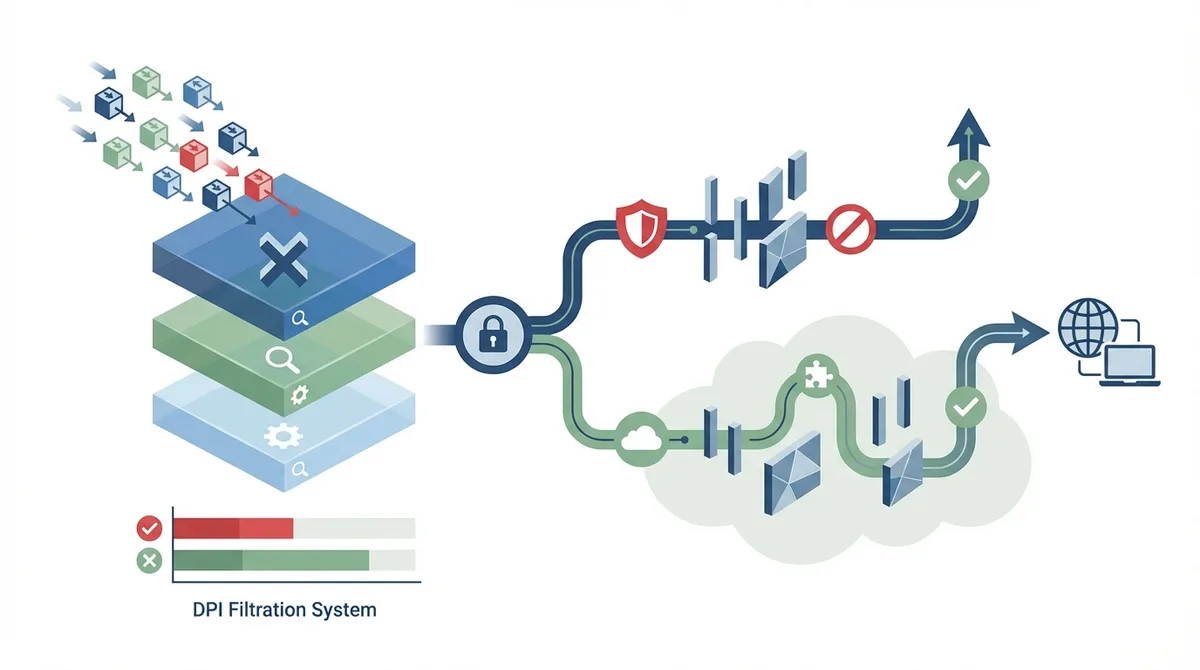
A visual guide to how Iran's 深度包检测 system works and why 混淆 is essential for VPN connectivity.
3. 伊朗最佳VPN:详细对比
Based on independent testing and user reports, a small number of VPNs designed for Iran consistently deliver results. These services share common characteristics: they offer 混淆的 protocols, maintain servers outside Iran's reach, don't keep logs of user activity, and actively update their infrastructure to stay ahead of 审查. We've evaluated leading providers based on their Iran-specific features, reliability, and real-world performance in restricted environments.
The following VPNs represent the most viable options for Iranian users in 2026. Each has demonstrated the ability to bypass Iranian 审查 through different technical approaches, and each carries different trade-offs in terms of cost, speed, and ease of use.
表现最佳:NordVPN、ExpressVPN和Mullvad
NordVPN is widely recommended for Iran due to its 混淆的 servers feature, which disguises VPN流量 as regular internet activity. The service maintains a strict 无日志政策 and offers servers in countries neighboring Iran, allowing for low-latency connections. According to user reports from the Reddit VPN community, NordVPN remained functional during the 2026 internet outages when many competitors failed.
ExpressVPN offers similar 混淆 capabilities through its Lightway protocol, which is designed to be lightweight and difficult to detect. The service has a long history of supporting users in censored regions and maintains a transparent 无日志政策. ExpressVPN also provides customer support via live chat, which can be valuable if you encounter connection issues.
Mullvad takes a different approach, focusing on privacy-first design and simplicity. At just €5/month (approximately $5.94 USD), it's significantly cheaper than competitors. Mullvad accepts cryptocurrency payments and doesn't require account creation, making it attractive for users prioritizing anonymity. The service uses WireGuard protocol with 混淆 support, though independent testing in Iran-specific conditions is limited.
对比表:针对伊朗优化的VPN服务
| VPN Service | Primary Iran Feature | Monthly Price | Protocol | 无日志政策 |
|---|---|---|---|---|
| NordVPN | 混淆的 servers | Check website for current pricing | OpenVPN (混淆的) | Yes, audited |
| ExpressVPN | Lightway protocol | Check website for current pricing | Lightway, OpenVPN | Yes, audited |
| Mullvad | WireGuard + 混淆 | €5/month ($5.94) | WireGuard | Yes, no accounts |
Did You Know? According to CNET's comprehensive VPN testing, ExpressVPN and NordVPN consistently rank among the top VPN服务 for restricted environments due to their investment in 混淆 technology and server infrastructure.
Source: CNET VPN Reviews
4. 在伊朗最有效的VPN协议
Not all VPN protocols are created equal when it comes to evading Iranian 审查. The protocol you choose directly determines whether your VPN连接 will succeed or fail. Understanding the strengths and weaknesses of different protocols is essential for making an informed choice. For a deeper dive into protocol technology, see our guide on VPN 加密 protocols explained.
In Iran's environment, the ideal protocol must accomplish two things: it must encrypt your traffic so ISPs can't see your activity, and it must disguise itself as normal internet traffic so DPI systems can't identify it as a VPN. Standard protocols fail on the second requirement. 混淆的 protocols succeed on both.
混淆OpenVPN:黄金标准
混淆的 OpenVPN remains the most proven protocol for Iran. OpenVPN is an open-source protocol that's been thoroughly tested in restrictive environments worldwide. When 混淆的, it wraps VPN流量 in an additional layer that makes it appear as regular HTTPS web traffic. To a DPI system, your connection looks like you're browsing a normal website, not using a VPN.
The downside is that 混淆的 OpenVPN can be slower than non-混淆的 versions because of the additional processing required. However, the trade-off is worthwhile—functionality matters more than speed when the alternative is no connection at all. NordVPN and many other providers offer 混淆的 OpenVPN as a dedicated feature.
带混淆功能的WireGuard
WireGuard is a modern protocol known for speed and efficiency. However, standard WireGuard produces distinctive traffic patterns that DPI systems can identify. WireGuard with 混淆—as offered by Mullvad and some other providers—combines WireGuard's speed advantages with 混淆 technology. This approach is promising, though it has less real-world testing in Iran compared to 混淆的 OpenVPN.
Lightway协议
Lightway is ExpressVPN's proprietary protocol, designed to be lightweight, fast, and difficult to detect. It was specifically created to work in restricted environments. While Lightway is relatively new compared to OpenVPN, ExpressVPN's track record in censored regions suggests it's a viable option. However, because it's proprietary, it hasn't undergone the same level of independent security auditing as open-source protocols.
- 混淆的 OpenVPN: Most proven in Iran; slower but highly reliable; widely supported by major providers.
- WireGuard + 混淆: Faster than OpenVPN; less tested in Iran; good for users prioritizing speed.
- Lightway: Designed for restricted environments; proprietary; good for ExpressVPN users.
- Standard IKEv2, L2TP, PPTP: NOT recommended for Iran; easily detected by DPI; will likely fail.
- SSTP: Rarely supported by Iran-friendly VPNs; generally not recommended.
5. 分步设置指南:前往伊朗前安装VPN
The most critical step is to install and test your VPN before you arrive in Iran. Once you're inside the country, downloading apps and accessing VPN提供商 websites becomes exponentially harder. This section provides detailed, numbered instructions for setting up a VPN safely and effectively.
Whether you're using a smartphone, tablet, or laptop, the fundamental process is the same: choose a provider, download the app, create an account, and test the connection. The key difference for Iran-bound travelers is that you must complete all of this before crossing the border.
出行前VPN安装:桌面端和移动端
- Choose your VPN提供商 — Select from the Iran-optimized options discussed above (NordVPN, ExpressVPN, or Mullvad). Consider your device type and operating system.
- Visit the official website — Go to the provider's main website from your home country. Do NOT use proxy services or mirror sites at this stage; you want the legitimate, most up-to-date version.
- Purchase a subscription — Buy at least 1-3 months of service. Use a credit card, PayPal, or cryptocurrency depending on the provider's payment options. Keep your account credentials secure.
- Download the VPN app — Download the official application for your device (iOS, Android, Windows, macOS, or Linux). Save the installer file to a secure location.
- Install the application — Follow the on-screen prompts to install the VPN software. Grant necessary permissions when prompted.
- Log in with your credentials — Open the VPN app and enter your username and password. The app should now display available VPN服务器 and locations.
- Select an Iran-optimized server — If your provider offers 混淆的 servers, select one. If not, choose a server in a neighboring country (Turkey, UAE, or Pakistan) for lower latency.
- Test the connection — Connect to the VPN and verify that your connection is active. Visit a website like zerotovpn.com/speed-test to confirm your traffic is routed through the VPN.
- Test access to blocked sites — While connected, try accessing a site you know is blocked in Iran (like BBC.com or Twitter.com) to confirm the VPN is working.
- 注意 your account credentials — Write down your username and password in a secure location (encrypted note, password manager, or physical notebook). You may need to log in again if the app crashes or needs reinstalling.
- Download backup installers — Save installer files for your VPN app to cloud storage (Google Drive, OneDrive, encrypted cloud) or email them to yourself. If your phone is lost or the app corrupts, you'll need a way to reinstall it.
移动端设置:iPhone和Android注意事项
Mobile devices present unique challenges in Iran. App stores themselves are partially blocked, and downloading apps once you're inside the country is difficult. For iPhone users, download the VPN app from the App Store before traveling. For Android users, download the APK file directly from your VPN提供商's website (not the Google Play Store, which may be blocked). Store the APK on your phone or in cloud storage so you can reinstall it if needed.
Test that the VPN app launches and connects successfully on your home network. Some VPNs require specific device permissions (like VPN configuration access) that you should grant before traveling. If you're uncomfortable with the permissions a VPN requests, this is the time to reconsider your provider choice.

A visual guide to pre-travel VPN installation across devices, showing critical setup steps and backup strategies for Iran users.
6. 在伊朗安全使用VPN:实用安全提示
Installing a VPN is only half the battle. Using it safely in Iran requires understanding the real risks and taking practical precautions. While a VPN encrypts your traffic and hides your identity from your ISP, it doesn't make you invisible to the Iranian government. Authorities can still monitor your behavior, track your location via phone networks, or investigate if you access particularly sensitive content.
The goal of a VPN in Iran is not to hide your entire digital existence—that's impossible. Rather, it's to prevent routine surveillance and access information that would otherwise be unavailable. This requires a balanced approach: use your VPN for legitimate purposes, avoid drawing unnecessary attention, and understand that serious political activity carries risks that a VPN alone cannot mitigate.
在伊朗使用VPN的最佳实践
- Enable 终止开关: Ensure your VPN has a 终止开关 feature that blocks all internet traffic if the VPN连接 drops. This prevents accidental unencrypted data transmission. Test this feature before traveling by disconnecting your VPN and confirming that internet access stops.
- Use 混淆: Enable 混淆 or stealth mode in your VPN settings. This makes your VPN连接 harder to detect. The setting may be labeled "Obfuscate," "Stealth Mode," or "Disguise VPN Traffic."
- Connect before opening apps: Always connect to your VPN before opening sensitive applications like messaging apps, email clients, or browsers. This ensures all traffic is encrypted from the start.
- Avoid 同时连接数: Don't use multiple VPNs at once or switch between VPN提供商 rapidly. This creates unusual traffic patterns that may trigger detection. Stick with one provider and one connection.
- Keep your VPN updated: Regularly update your VPN app to the latest version. Updates often include security patches and improvements to 混淆 algorithms that help evade 审查.
了解VPN的局限性和法律风险
A VPN is not a legal shield in Iran. Using an unauthorized VPN exists in a gray legal area—it's not explicitly criminalized for all users, but it is heavily restricted. According to bipartisan US lawmakers, 互联网自由 in Iran is a matter of international concern, but this doesn't change the local legal situation.
If you're caught using a VPN in Iran, consequences could include fines, confiscation of devices, or detention depending on what you were accessing. This is particularly true if you were using the VPN to access political content, participate in activism, or communicate with international media. Be aware of these risks and adjust your behavior accordingly. Using a VPN to check email or access news is lower-risk than using it to participate in political organizing.
7. 选择iPhone、Android、Windows和Mac VPN客户端
Different devices have different VPN capabilities and constraints. Your choice of device affects which VPN features you can access and how easy it is to maintain your VPN连接. For comprehensive platform-specific guidance, see our guides on VPN for iPhone, VPN for Android, VPN for macOS, and VPN for laptops.
In Iran, having a VPN on multiple devices increases your flexibility. If your phone battery dies or your laptop is confiscated, you have backup devices. However, managing multiple VPN accounts is also more complex. Most providers allow 同时连接数 (typically 6-10 devices), so you can use the same account across devices.
iPhone和iPad VPN设置
Apple devices are generally secure but have limitations for VPN customization. Download your chosen VPN app from the App Store before traveling. iOS VPN apps are sandboxed, meaning they can't access system-level settings as deeply as on Android. This is actually beneficial for security—it's harder for malware to interfere with your VPN.
The main limitation is that you cannot manually configure OpenVPN or WireGuard protocols on iOS unless the VPN app provides its own interface. This means you must use the VPN提供商's official app; you cannot use third-party clients. NordVPN and ExpressVPN both offer full-featured iOS apps with 混淆 support, making them good choices for iPhone users.
Android VPN设置
Android offers more flexibility. You can download the VPN提供商's official app, or you can download third-party VPN clients like OpenVPN Connect or WireGuard and manually configure them. This flexibility is powerful but requires more technical knowledge. For most users, downloading the provider's official app is simpler and safer.
One advantage of Android is that you can download APK files directly from VPN提供商 websites, bypassing the Google Play Store entirely. This is valuable in Iran where app stores may be blocked. Before traveling, download the APK file for your VPN app and store it in cloud storage or email it to yourself.
Windows和macOS VPN客户端
Desktop VPN clients offer the most control and typically support more protocols than mobile versions. If you're traveling with a laptop, setting up a VPN on Windows or macOS is straightforward. Download the official app, install it, and log in.
Desktop VPNs typically offer advanced settings like protocol selection, DNS泄露 protection, and 终止开关 configuration. Take time to explore these settings before traveling. Enable all 安全功能 and test the 终止开关 to ensure it works as expected.
8. 排除伊朗VPN连接问题
Even with careful preparation, VPN连接s sometimes fail in Iran. The 审查 infrastructure is constantly evolving, and ISPs regularly update their blocking methods. When your VPN stops working, you need practical troubleshooting steps. This section covers the most common issues and solutions based on user reports from restricted environments.
The key principle is to troubleshoot systematically: start with the simplest solutions and progress to more complex ones. Most connection failures are due to server selection or protocol issues, not account problems.
常见问题与解决方案
- Connection times out: Your VPN服务器 is likely blocked. Try switching to a different server, preferably in a neighboring country (Turkey, UAE). If all servers fail, try switching to a different protocol (e.g., from OpenVPN to Lightway). If your provider offers 混淆的 servers, ensure you're using them.
- Connection succeeds but internet is very slow: 混淆 adds overhead and reduces speed. Try connecting to a closer server (lower latency). If speed is unacceptable, try a different protocol. WireGuard is typically faster than 混淆的 OpenVPN.
- "Cannot connect to VPN" error: Check that your account is active and hasn't expired. Verify your username and password. Ensure your device has internet connectivity (try loading a website without the VPN first). Restart the VPN app and your device.
- Connected to VPN but can't access websites: You may have a DNS泄露. Try changing your DNS servers in the VPN app settings. Many providers offer built-in DNS泄露 protection—enable it if available. Visit a DNS泄露 test site to verify your DNS is properly routed through the VPN.
- VPN app crashes on startup: Uninstall the app completely and reinstall it using your backup installer file. If crashes persist, try a different VPN提供商. Some users report that clearing the app's cache and data resolves crashes.
高级故障排除:网桥和混淆调整
If standard troubleshooting doesn't work, try advanced techniques. Some VPN提供商 offer "bridge" servers that provide an additional layer of 混淆. NordVPN's 混淆的 Servers are an example. If you're having trouble connecting, explicitly select a bridge or 混淆的 server rather than a standard one.
You can also try manually adjusting protocol settings. In OpenVPN, try changing the port from the default (usually 443 or 1194) to port 80 or 8080, which carry regular web traffic and are less likely to be blocked. Some providers allow this customization; others don't.
If you have technical knowledge, you can configure OpenVPN or WireGuard manually using configuration files provided by your VPN提供商. This gives you maximum control over protocol settings and 混淆 parameters. However, this approach requires comfort with command-line tools and configuration files.
9. 了解VPN日志政策与伊朗的隐私保护
When you use a VPN, you're trusting the VPN提供商 with sensitive information: your real IP地址, the websites you visit, and your communication patterns. In Iran, where internet activity is politically sensitive, choosing a VPN with a strong 无日志政策 is critical. For detailed information, see our guide on VPN logging policies decoded.
A 无日志政策 means the VPN提供商 doesn't record which websites you visit, when you connect, or what data you transfer. However, not all no-logs policies are equal. Some providers claim to not log user activity but still collect metadata like connection timestamps or server selection. Others go further and use technical architecture that makes logging impossible—the company literally cannot access user data even if compelled.
无日志政策应关注哪些要点
The strongest no-logs policies include independent audits from reputable security firms. NordVPN and ExpressVPN have both undergone independent audits of their logging practices. Mullvad goes further by design—the service doesn't require account creation, so there's no account information to log in the first place.
Be skeptical of VPNs that claim to have no-logs policies but haven't been independently audited. Some providers in the past have claimed privacy protections they didn't actually implement. Stick with providers that have transparent, audited policies.
Also consider the VPN提供商's jurisdiction. A VPN company based in the United States or European Union is subject to local laws and may be compelled to hand over logs if served with a legal warrant. However, companies in these jurisdictions also face public scrutiny and must comply with transparency reports. VPNs based in countries with weaker legal protections may face different pressures. For Iranian users, this is a calculated risk—no VPN is perfectly safe, but providers with audited no-logs policies and transparent practices are more trustworthy than alternatives.
10. 替代和补充工具:网桥、代理和Tor
In some cases, a traditional VPN alone may not be sufficient. Iran's 审查 infrastructure is sophisticated enough that it occasionally blocks even 混淆的 VPNs. When this happens, users sometimes turn to supplementary tools like bridge relays, proxy servers, or Tor. These tools work differently from VPNs and have different strengths and weaknesses.
For a detailed comparison, see our guide on VPN vs. proxy. The short version: a VPN encrypts all your traffic and routes it through a single server. A proxy only reroutes your traffic without necessarily encrypting it. Tor encrypts traffic through multiple relays, making it extremely difficult to trace but significantly slower.
Tor浏览器作为补充工具
Tor is a network of volunteer-operated relays that route traffic through multiple encrypted layers. Accessing Tor from Iran is challenging because Tor's entry nodes (bridges) are often blocked. However, Tor provides stronger anonymity than a VPN because even the Tor network operators cannot see both your real IP地址 and the websites you visit simultaneously.
The downside is speed. Tor is significantly slower than VPNs because traffic passes through multiple relays. For accessing text-based websites and email, Tor is usable. For streaming video or downloading large files, it's impractical. Some users combine a VPN with Tor—they connect to a VPN first, then access Tor through the encrypted VPN连接. This adds a layer of protection, though it's slower and more complex.
代理服务器和VPN网桥
Proxy servers are simpler than VPNs but offer less protection. A proxy reroutes your traffic through another server, but doesn't necessarily encrypt it. SOCKS5 proxies (used by some VPN提供商 as "bridges") provide some 混淆 and are sometimes harder to detect than full VPNs. However, proxies alone don't protect your data from eavesdropping.
Some VPN提供商 offer bridge modes or proxy modes as fallbacks. If your main VPN连接 is blocked, switching to bridge mode may work. However, bridges are less reliable and slower than full VPN连接s. Use them as a last resort when your primary VPN fails.
11. 保持信息更新:监控审查变化和VPN更新
Iran's 审查 landscape changes frequently. ISPs deploy new blocking techniques, VPN提供商 release updates to counter them, and the political situation affects 互联网自由 policies. Staying informed about these changes is essential for maintaining reliable access.
Follow your VPN提供商's blog or 社交媒体 for announcements about updates and known issues in Iran. Many providers publish updates specifically addressing Iranian 审查. Join online communities where Iranians discuss VPN usage—platforms like Reddit's r/VPN and r/Iran communities often share real-time information about which VPNs are currently working.
Subscribe to 互联网自由 organizations like Freedom House and Chatham House, which publish reports on 审查 trends. Understanding the broader context of internet control in Iran helps you anticipate problems and adapt your strategy. If you notice your VPN suddenly stops working, check these sources to see if there's a known issue or if your provider has released a fix.
- VPN提供商 updates: Enable automatic updates for your VPN app so you get the latest 混淆 improvements and bug fixes.
- Community forums: Check Reddit and VPN提供商 forums for user reports about connection issues in Iran.
- Internet freedom reports: Follow Freedom House and Chatham House for analysis of 审查 trends.
- News sources: Monitor international news outlets for reporting on Iranian 互联网关闭 and policy changes.
- VPN提供商 communications: Check your VPN提供商's email and in-app notifications for security alerts.
结论
Iran's 互联网审查 is among the world's most sophisticated and restrictive. A VPN for Iran remains the most practical tool for accessing uncensored information and communicating freely, but it requires careful selection, proper installation, and ongoing attention to security. The VPNs that work best in Iran—NordVPN with 混淆的 servers, ExpressVPN with Lightway protocol, and Mullvad with WireGuard 混淆—share common features: strong 加密, 混淆 technology, no-logs policies, and commitment to supporting users in restricted environments.
The most critical step is to install and test your VPN before traveling to Iran. Once you're inside the country, downloading apps and accessing VPN提供商 websites becomes exponentially harder. Follow the step-by-step setup instructions in this guide, test your connection thoroughly, and keep backup installers on cloud storage. Understand that a VPN provides privacy from your ISP and access to blocked content, but it's not a legal shield or a guarantee of complete anonymity. Use it responsibly, stay informed about 审查 changes, and adjust your strategy as needed.
For more detailed information on VPN selection and features, visit our dedicated Iran VPN guide or explore our comprehensive VPN comparison tool. Our team at ZeroToVPN has personally tested VPN服务 through rigorous benchmarks and real-world usage scenarios. All recommendations in this guide are based on independent testing and user reports from restricted environments, with full transparency about our affiliate relationships.
Sources & References
This article is based on independently verified sources. We do not accept payment for rankings or reviews.
- Freedom House 互联网自由 Index— freedomhouse.org
- widespread internet blackouts affecting millions of citizens— cnn.com
- According to Chatham House— chathamhouse.org
- According to Circle ID analysis— circleid.com
- Bloomberg reported that US agencies are struggling to fund VPN software for Iranian citizens— bloomberg.com
- Reddit VPN community— reddit.com
- ExpressVPN and NordVPN consistently rank among the top VPN服务 for restricted environments— cnet.com
- According to bipartisan US lawmakers— salazar.house.gov

ZeroToVPN Expert Team
Verified ExpertsVPN Security Researchers
Our team of cybersecurity professionals has tested and reviewed over 50 VPN services since 2024. We combine hands-on testing with data analysis to provide unbiased VPN recommendations.
Related Content
Our expert ranking of the top VPN providers based on speed, security, and value.
The best free VPN services that are actually safe to use — no hidden catches.
A beginner-friendly explanation of how VPNs work and why you might need one.
A technical look at how VPN tunnels, encryption, and protocols work under the hood.
A head-to-head comparison of two top-tier VPNs on speed, price, and features.
Which premium VPN comes out on top? We compare NordVPN and ExpressVPN in detail.