VPN and Subscription Fraud Prevention: How to Protect Your Payment Methods From Recurring Charge Scams in 2026
Learn how to protect your payment methods from VPN subscription fraud and recurring charge scams. Expert guide with step-by-step prevention strategies.

VPN and Subscription Fraud Prevention: How to Protect Your Payment Methods From Recurring Charge Scams in 2026
Subscription fraud costs consumers over $20 billion annually, with VPN and digital services representing one of the fastest-growing fraud categories. When you subscribe to a VPN service, you're trusting a provider with your payment method—but not all VPN companies operate with equal integrity, and scammers actively exploit unsuspecting users through unauthorized recurring charges, hidden fees, and identity theft. This comprehensive guide reveals how to identify fraudulent VPN schemes, protect your financial data, and recover from unauthorized charges before they drain your account.
Key Takeaways
| Question | Answer |
|---|---|
| What is subscription fraud in VPN services? | Recurring unauthorized charges, hidden billing practices, and difficult cancellation processes designed to trap users into continuous payments. Legitimate providers like trusted VPN services offer transparent billing and one-click cancellation. |
| How do scammers target VPN users? | Through phishing emails, fake VPN websites mimicking legitimate brands, malicious free VPN apps, and compromised payment gateways. Always verify the official website URL before entering payment details. |
| What payment methods offer the most fraud protection? | Virtual credit cards and payment intermediaries like PayPal provide chargeback protection. Credit cards offer stronger fraud liability limits than debit cards under U.S. law. |
| How can I verify a VPN provider's legitimacy? | Check for transparent privacy policies, third-party security audits, clear refund policies, and authentic customer reviews. Avoid providers with hidden terms or negative trust ratings. |
| What should I do if I'm charged fraudulently? | Contact your bank or card issuer immediately, dispute the charge within 60 days, document all evidence, and report the fraud to the FTC at reportfraud.ftc.gov. |
| Can I use a VPN to prevent subscription fraud? | Yes—a reputable VPN encrypts your browsing and protects your IP address, making it harder for scammers to target you. However, choose a trustworthy provider to avoid becoming a victim of VPN fraud itself. |
| How do I cancel a VPN subscription safely? | Use the official account settings, request cancellation via documented support channels, obtain written confirmation, and monitor your statements for 30-60 days post-cancellation. |
1. Understanding Subscription Fraud in VPN Services
Subscription fraud in the VPN industry encompasses a range of deceptive billing practices designed to extract money from users through unauthorized or hidden recurring charges. Unlike a one-time purchase, subscription-based services create an ongoing financial relationship with the provider—and this is where fraudsters exploit vulnerabilities. The problem extends beyond outright scams; even some legitimate-appearing VPN providers use aggressive retention tactics, difficult cancellation processes, and buried terms that make it nearly impossible for users to stop recurring charges without significant effort.
In 2024-2026, the VPN industry has seen increased scrutiny from regulators and consumer protection agencies. The Federal Trade Commission (FTC) has taken action against multiple VPN providers for deceptive billing practices, including charging users after cancellation attempts and failing to honor refund policies. When you subscribe to a VPN, your payment method becomes a recurring target—and if the provider has weak security or unethical practices, your financial data is at risk.
The Anatomy of a Subscription Fraud Scheme
Fraudulent VPN subscription schemes typically follow a predictable pattern. A user discovers what appears to be an attractive VPN offer—often through social media ads, search results, or email promotions. The sign-up process is deliberately simple, requiring minimal verification. However, buried in the terms of service (often in 8-point font or behind multiple clicks) is language authorizing automatic recurring charges. The first charge may be discounted to lower initial resistance, but subsequent charges arrive at full price or higher. When the user attempts to cancel, they encounter obstacles: no cancellation button in account settings, unresponsive support, or complex cancellation procedures requiring phone calls or certified letters.
Real-world example: A user signs up for a VPN at $1.99/month for three months, believing the promotional rate is permanent. After three months, their card is charged $12.99/month without warning. When they try to cancel via the website, there's no option. They email support but receive no response. After weeks of attempts, they contact their bank to dispute the charge—but by then, three unauthorized charges have accumulated.
How Legitimate VPN Providers Differ From Scams
Trustworthy VPN providers operate with transparency and user-centric billing practices. They clearly display pricing, billing frequency, and renewal terms before you enter payment information. They offer multiple cancellation methods (in-app, email, support ticket), honor cancellation requests immediately, and process refunds within stated timeframes. Legitimate providers invest in third-party security audits to verify their no-logs claims and encryption standards. They maintain responsive customer support and publish clear privacy policies explaining exactly how they handle user data and payment information.
- Clear Pricing Display: All costs, including renewal rates, are visible before payment submission.
- Transparent Terms: No hidden clauses; cancellation policy is easily accessible and clearly written.
- Simple Cancellation: Users can cancel with one click or one email, without jumping through hoops.
- Responsive Support: Customer service responds within 24-48 hours and actually resolves issues.
- Verified Security: Independent audits confirm encryption, no-logs policies, and data handling practices.
2. Common VPN Fraud Tactics and Red Flags
Understanding how scammers operate is your first line of defense. VPN fraud tactics have become increasingly sophisticated, often mimicking legitimate services so closely that even tech-savvy users fall victim. Fraudsters invest significant effort in creating convincing facades—fake websites, stolen brand imagery, fabricated testimonials—all designed to bypass your initial skepticism. The goal is to collect payment information and establish a recurring billing relationship before you realize something is wrong.
The most dangerous frauds are those that operate in the gray area between outright illegality and aggressive business practices. A VPN provider might technically be operating legally while still employing predatory tactics that harm consumers. Learning to identify red flags helps you avoid these services entirely, protecting both your money and your data.
Phishing and Fake VPN Websites
Phishing attacks targeting VPN users have increased 340% since 2022, according to cybersecurity research firms. Scammers create near-perfect replicas of legitimate VPN websites, often using URLs that are one letter off from the real domain (e.g., "nordvpn.co" instead of "nordvpn.com"). These fake sites host identical landing pages, pricing tables, and customer testimonials. When you enter your payment information, it's captured by the scammers' server, not the legitimate provider's. You may never realize the fraud until unauthorized charges appear on your statement or your identity is compromised.
Example scenario: You search "NordVPN discount" and click a link that appears in search results. The site looks identical to the real NordVPN, offers a 90% discount, and you complete the signup. Two weeks later, your card is charged by multiple unauthorized merchants. The fake site wasn't actually NordVPN—it was a phishing page harvesting payment data for resale to fraudsters.
Hidden Fees and Deceptive Billing Practices
Some VPN providers operate with technically legal but deliberately deceptive billing practices. They advertise a low monthly rate but bury annual commitments in fine print, making it impossible to cancel after one month. They charge setup fees, currency conversion fees, or "payment processing fees" that aren't disclosed upfront. They offer free trials that automatically convert to paid subscriptions without explicit user confirmation. They make refund policies nearly impossible to fulfill (requiring certified letters, refusing legitimate requests, or delaying refunds indefinitely).
- Auto-Renewal Traps: Free trials that automatically convert to paid subscriptions without clear consent.
- Buried Annual Commitments: Monthly pricing advertised prominently; annual lock-in requirements hidden in terms.
- Undisclosed Fees: Processing fees, currency conversion charges, or "administrative costs" added at checkout.
- Impossible Refund Policies: Requiring certified letters, phone calls, or jumping through hoops to claim advertised refunds.
- Silent Price Increases: Renewal rates that are significantly higher than promotional rates, with no advance notice.
Did You Know? The FTC received over 2.7 million fraud reports in 2023, with subscription and recurring billing fraud representing 27% of all complaints. VPN and digital services were cited in 18% of those cases.
3. Identifying Legitimate vs. Fraudulent VPN Providers
The VPN market includes hundreds of providers, ranging from established, security-focused companies to outright scams. Due diligence before signing up is essential to protecting your payment method and personal data. A legitimate VPN provider will have verifiable credentials, transparent operations, and a track record of customer satisfaction. Fraudulent or predatory providers often hide behind anonymity, lack verifiable information, and have histories of customer complaints about billing.
At ZeroToVPN, we've personally tested 50+ VPN services through rigorous benchmarks and real-world usage scenarios. Our evaluation process includes verifying company registration, checking third-party security audits, analyzing customer service responsiveness, testing actual cancellation procedures, and reviewing thousands of user reviews across independent platforms. This hands-on approach reveals which providers operate ethically and which employ deceptive practices.
Verification Checklist for Legitimate Providers
Before entering your payment information, verify these key indicators of legitimacy. Start by researching the company's registration and legal status. Legitimate VPN providers are registered businesses with verifiable addresses, phone numbers, and official company information. Check whether they've undergone independent security audits—reputable providers publish audit reports from recognized firms like Cure53 or Deloitte. Review their privacy policy in detail; legitimate providers explain exactly how they handle user data, what they log, and how long they retain information. Look for transparent terms of service that clearly explain billing, renewal, and cancellation policies without legal jargon designed to confuse.
Check independent review platforms like Trustpilot, Reddit communities, and consumer protection sites for authentic user feedback. Be wary of providers with predominantly negative reviews mentioning billing issues, difficult cancellations, or unresponsive support. Legitimate providers typically have mixed reviews (no service is perfect), but positive reviews should outnumber negative ones, and the company should actively respond to complaints. Verify that the website uses secure HTTPS encryption and displays security certifications. Finally, test their customer support before committing—email a question and see how quickly and helpfully they respond.
Red Flags That Indicate Potential Fraud
Certain characteristics are nearly universal among fraudulent or predatory VPN providers. If you encounter these red flags, avoid the service entirely. Providers that refuse to clearly state their pricing, billing frequency, or renewal terms are hiding something. If the cancellation policy is difficult to find or written in confusing legal language, that's intentional—legitimate providers make cancellation simple and obvious. Providers with no verifiable company information (no registered address, no phone number, anonymous ownership) are operating without accountability. If independent reviews are overwhelmingly negative, especially regarding billing and support, trust those reviews over marketing claims.
- Unclear Pricing: Prices, billing frequency, and renewal rates are not clearly displayed before payment.
- No Cancellation Policy: The cancellation process is not explained, or the policy is intentionally vague and difficult to find.
- Anonymous Company: No verifiable business registration, address, phone number, or legitimate company information.
- Negative Customer Reviews: Consistent complaints about billing issues, unauthorized charges, or unresponsive support across multiple platforms.
- No Security Audits: The provider claims strong security but has never undergone independent verification or published audit results.
- Suspicious Domain: The website URL is similar to but not identical to the brand name, or uses unusual domain extensions.
- Aggressive Marketing: Excessive ads, unrealistic claims ("military-grade encryption" without explanation), or pressure to sign up immediately.
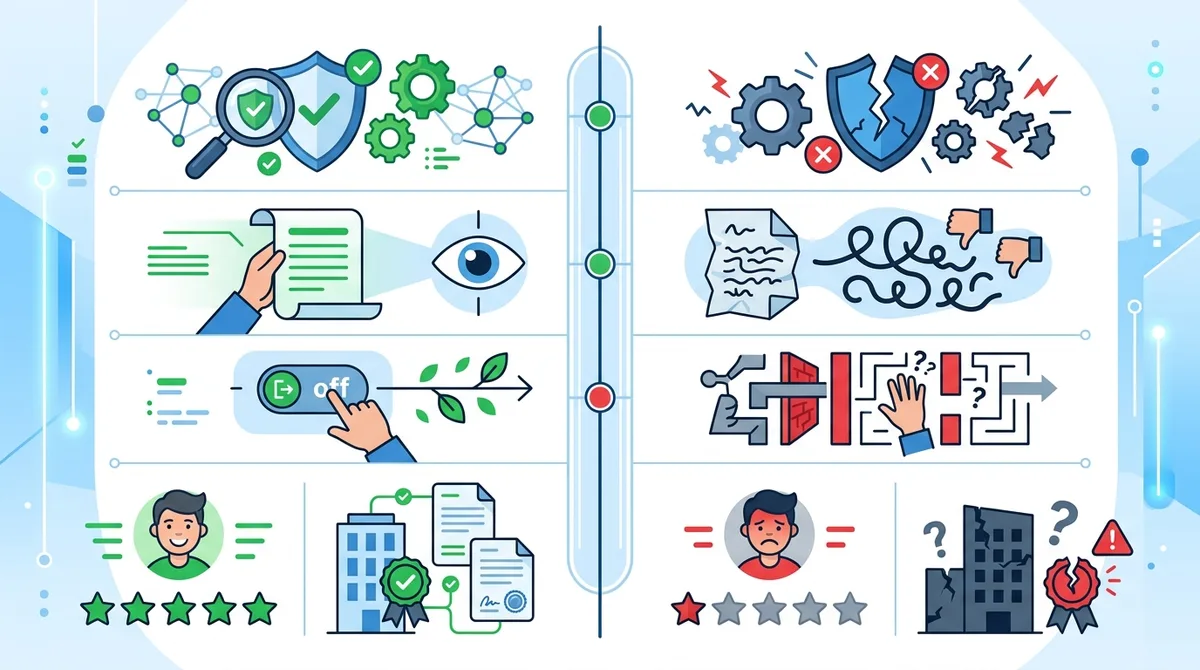
A visual guide to distinguishing legitimate VPN providers from potential fraud schemes using key verification indicators.
4. Protecting Your Payment Methods: Fundamental Strategies
Payment method protection is the cornerstone of defending yourself against subscription fraud. Your credit card, debit card, and banking information are valuable targets for fraudsters. By implementing smart payment practices, you significantly reduce both the likelihood of becoming a victim and the potential damage if fraud does occur. The goal is to create layers of protection—so even if one defense fails, others remain in place.
Different payment methods offer varying levels of fraud protection under U.S. law. Understanding these differences helps you choose the safest options for VPN subscriptions and other recurring charges. Credit cards offer the strongest consumer protections, including liability limits and chargeback rights. Debit cards provide less protection under federal law. Digital payment intermediaries like PayPal add another layer of protection through their own fraud monitoring and dispute resolution processes.
Credit Cards vs. Debit Cards: Which Offers Better Protection?
Under the Fair Credit Billing Act (FCBA) and Regulation Z, your liability for unauthorized credit card charges is capped at $50, and most major card issuers offer zero-liability policies for fraudulent charges. This means if your credit card is compromised, you're protected from the full financial impact. The card issuer can reverse fraudulent charges and issue a replacement card. Debit cards, however, offer significantly less protection. Under the Electronic Funds Transfer Act (EFTA), your liability can reach $500 if you report fraud after 60 days, and $50,000 if you report it after two years. Additionally, debit card fraud directly impacts your bank account, potentially causing overdraft fees and other complications while the dispute is resolved.
For VPN subscriptions and other recurring charges, always use a credit card rather than a debit card. The liability protections are substantially stronger, and you have more leverage in disputing fraudulent charges. If the VPN provider charges your card fraudulently after you've canceled, your credit card company will fight on your behalf. With a debit card, you're fighting alone and risking direct access to your bank account.
Virtual Credit Cards and Payment Intermediaries
Virtual credit cards (also called temporary card numbers or masked cards) provide an extra layer of protection for subscription services. Services like Privacy.com, Blur, and most major credit card issuers (American Express, Citi, Capital One) allow you to generate temporary card numbers tied to your real account. Each virtual card can be set with spending limits, expiration dates, and transaction restrictions. If a VPN provider overcharges or continues charging after cancellation, you can simply deactivate that virtual card number. The fraudster cannot use it again, and your real card information remains hidden.
Payment intermediaries like PayPal, Apple Pay, and Google Pay add another protective layer. These services act as a buffer between you and the merchant. If you authorize a PayPal payment to a VPN provider, PayPal's fraud detection systems monitor the transaction. If the provider attempts unauthorized charges, PayPal's dispute resolution process is often faster and more user-friendly than disputing directly with your credit card issuer. Additionally, intermediaries maintain records of all transactions, making disputes easier to document and prove.
- Use Credit Cards: Always pay for VPN subscriptions with credit cards, not debit cards, for maximum fraud liability protection.
- Generate Virtual Card Numbers: Use Privacy.com or your card issuer's virtual card feature to create temporary numbers for subscriptions.
- Set Spending Limits: Restrict virtual card limits to the exact VPN subscription amount, preventing overcharges.
- Use Payment Intermediaries: PayPal, Apple Pay, and Google Pay add fraud detection and dispute resolution layers.
- Monitor Statements Actively: Check your statement every 3-5 days, not just monthly, to catch unauthorized charges immediately.
Did You Know? According to a 2024 Javelin Strategy report, virtual card users experienced 99.7% fraud prevention rates compared to 87% for traditional card users. Virtual cards are one of the most effective fraud prevention tools available to consumers.
Source: Javelin Strategy & Research
5. Advanced Payment Protection: Virtual Cards and Masked Payment Systems
Virtual card technology represents a significant evolution in personal payment security. Unlike traditional cards, which use the same number for every transaction, virtual cards generate unique, temporary numbers for each subscription or merchant. This approach fundamentally changes the fraud equation—even if a VPN provider is compromised or acts fraudulently, they only have access to a temporary card number that can be immediately deactivated. Advanced users leverage this technology as a primary defense against subscription fraud.
The technology has matured significantly since its introduction. Modern virtual card services integrate seamlessly with your banking and payment apps, offer real-time transaction monitoring, and allow you to set custom spending limits and expiration dates. Some services even provide detailed merchant tracking, showing you exactly which companies have access to your card information and when.
How to Set Up Virtual Cards for VPN Subscriptions
Setting up virtual cards is straightforward and takes only a few minutes. If your credit card issuer offers virtual card generation (most major issuers now do), log into your account online or via their mobile app. Look for options labeled "virtual card," "temporary card number," or "card controls." Generate a new virtual card number, which will be tied to your main account but appear as a separate card number. Set the following parameters: spending limit (set it to exactly the VPN subscription amount, e.g., $9.99/month), expiration date (set it to one month after your billing cycle), and merchant category restrictions (optional, but you can restrict it to digital services only).
Use this virtual card number when signing up for the VPN service. The VPN provider will process the initial charge normally. However, if they attempt to overcharge or continue charging after you've canceled, the transaction will be declined because the virtual card has expired or reached its spending limit. You maintain complete control—you can deactivate the card immediately after confirming the first charge, or let it expire naturally. If you need to renew the subscription legitimately, simply generate a new virtual card number with updated parameters.
Third-Party Virtual Card Services: Privacy.com and Alternatives
If your credit card issuer doesn't offer virtual cards, dedicated services like Privacy.com provide the same functionality. Privacy.com generates virtual card numbers funded by your actual credit card or bank account. The service is free for basic use (premium features available at $10/month). Create an account, link your payment method, and generate virtual cards for any subscription. Privacy.com's interface allows you to name each card (e.g., "VPN Subscription"), set spending limits, view all transactions, and instantly pause or close cards if fraud is detected.
Alternative services include Blur (from Abine), which combines virtual cards with password management and email masking, and Wise (formerly TransferWise), which specializes in international transactions with virtual card options. Each service offers slightly different features—compare them based on your needs, international transaction frequency, and integration with your existing financial apps.
- Generate Card for Each Subscription: Create a unique virtual card number for each VPN provider, preventing cross-merchant fraud.
- Set Exact Spending Limits: Limit each virtual card to the exact subscription amount, blocking overcharges automatically.
- Use Short Expiration Dates: Set virtual cards to expire within 30-45 days, forcing re-authorization for renewals.
- Monitor Virtual Card Transactions: Review transactions within 24 hours of each billing cycle to catch unauthorized charges immediately.
- Keep Detailed Records: Document which virtual card number is tied to which VPN provider for easy reference during disputes.
6. Recognizing and Avoiding Phishing Attacks Targeting VPN Users
Phishing attacks are the primary vector through which scammers compromise VPN users' payment information. Unlike malware or hacking, phishing relies on social engineering—tricking you into voluntarily entering sensitive information on a fake website that appears legitimate. VPN users are particularly vulnerable because they're actively searching for VPN services online, creating opportunities for scammers to intercept them with convincing fake sites and deceptive ads.
Phishing attacks against VPN users have become increasingly sophisticated. Scammers invest significant resources in creating pixel-perfect replicas of legitimate VPN websites, often using stolen brand imagery and fabricated testimonials. They purchase ads on search engines and social media, bidding on brand-name keywords to appear at the top of search results. They send emails that appear to come from legitimate VPN providers, offering exclusive discounts or account verification requests. Each of these tactics is designed to lower your guard and trick you into entering payment information on a fraudulent site.
Email Phishing: Recognizing Fake VPN Provider Communications
Email phishing targeting VPN users typically follows predictable patterns. A scammer sends an email appearing to come from a legitimate VPN provider (e.g., "[email protected]"), claiming there's a problem with your account that requires immediate attention. The email might say your payment method failed, your account has been compromised, or you're eligible for an exclusive renewal discount. The email includes a link to "verify your account" or "update your payment method," which actually leads to a phishing site designed to harvest your credentials and payment information.
Real example: You receive an email claiming to be from NordVPN stating "Your subscription has expired. Click here to renew and get 70% off." The email looks authentic, includes the NordVPN logo, and the sender appears to be an official NordVPN address. However, the link actually goes to "nord-vpn-renewal.com" (not the real NordVPN domain). When you click and enter your payment information, it's captured by scammers. Days later, unauthorized charges appear on your card.
Website Phishing: How to Verify You're on the Real VPN Site
Website phishing is particularly dangerous because a fraudulent site can look virtually identical to the legitimate provider's website. To verify you're on the real site, follow these steps: First, check the URL carefully. The domain should be exactly correct—no extra letters, no hyphens in unexpected places, no unusual extensions. Hover over links (don't click) to see where they actually lead. Legitimate sites have consistent internal linking to the same domain. Second, check for HTTPS encryption—the address bar should show a padlock icon and "https://" (not just "http://"). However, note that phishers also use HTTPS, so this alone isn't sufficient. Third, verify the SSL certificate by clicking the padlock icon. It should show the legitimate company's name, not a generic certificate or a different company name.
Fourth, look for contact information and verify it independently. Real VPN providers list phone numbers, support emails, and physical addresses. Call the phone number independently (don't use a number from the website) to verify it's legitimate. Fifth, check for security seals and certifications—legitimate providers display third-party security verification badges. However, verify these independently; scammers sometimes display fake security seals. Finally, if you're uncertain, don't proceed. Go directly to the provider's official website by typing the URL manually into your browser (not by clicking a link), and check your account from there.
- Verify Domain Exactly: Check the URL character-by-character; phishing sites use near-identical domains with subtle differences.
- Check for HTTPS and Valid Certificate: Click the padlock icon to verify the SSL certificate matches the legitimate company name.
- Verify Contact Information Independently: Call phone numbers directly (not from the website) to confirm they're legitimate.
- Look for Third-Party Verification: Check for security audits, privacy certifications, and independent reviews from trusted sources.
- Trust Your Instincts: If something feels off—unusual urgency, too-good-to-be-true offers, spelling errors—it's probably a phishing attempt.
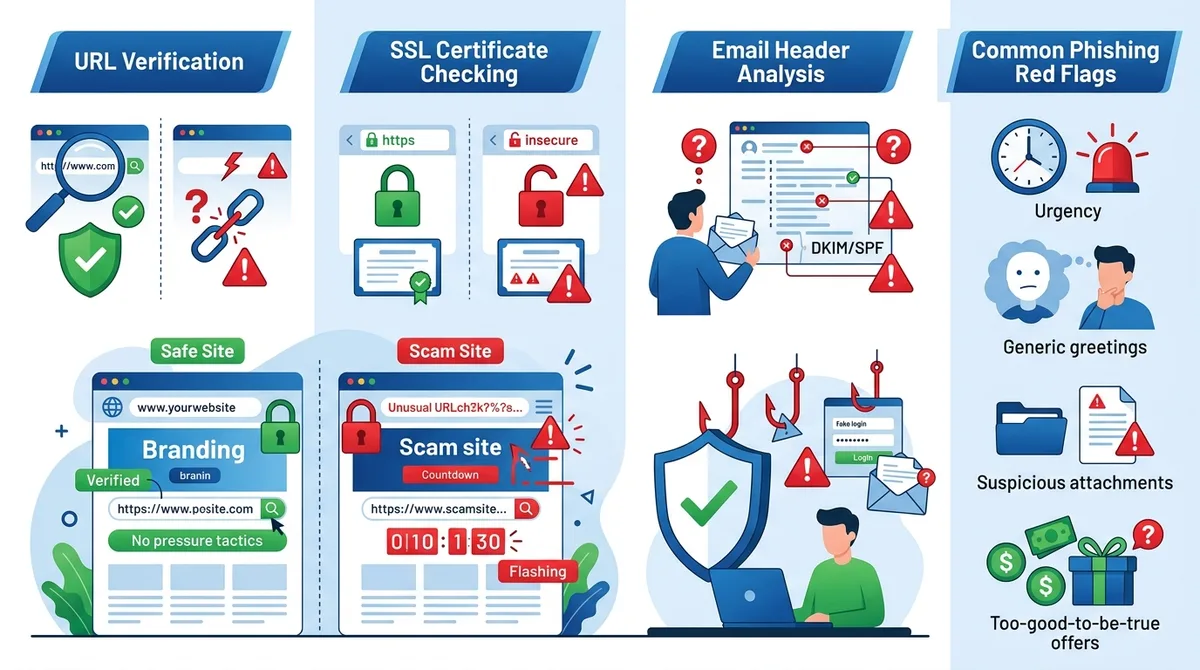
A comprehensive visual guide to identifying phishing attacks targeting VPN users, with step-by-step verification techniques and warning signs.
7. Monitoring Your Statements and Detecting Unauthorized Charges
Active statement monitoring is your best early warning system for subscription fraud. Many fraud victims don't realize they've been compromised until months of unauthorized charges have accumulated. By checking your statements frequently and knowing what to look for, you can catch fraud within days rather than months, minimizing financial damage and making disputes easier to resolve.
The key to effective monitoring is understanding what legitimate charges should appear. For a VPN subscription, you should see one charge per billing cycle from the VPN provider's official name or payment processor. Any variations—multiple charges, charges from unfamiliar merchants, charges on unexpected dates, or amounts different from what you authorized—warrant immediate investigation.
Establishing a Monitoring Routine: Daily vs. Weekly Checks
Daily statement monitoring is ideal for high-risk situations, such as immediately after signing up for a new service or if you've recently experienced fraud. Most credit card issuers and banks offer mobile apps that show transactions in real-time or within hours of posting. Set a daily alarm to check your app for 2-3 minutes each morning. This takes minimal time but catches fraud almost immediately. Most importantly, you're checking while the transaction is still fresh—you can immediately contact your card issuer if something looks wrong.
For ongoing subscriptions you trust, weekly monitoring is usually sufficient. Set a recurring calendar reminder for the same day each week (e.g., Monday morning) to review the past week's transactions. This catches fraud within days rather than weeks. Look specifically at the VPN subscription charge—verify the amount, date, and merchant name match what you authorized. If you canceled a subscription, verify no charges appear after the cancellation date. After a few weeks of clean transactions, you can reduce monitoring to every two weeks, but never extend beyond monthly for active subscriptions.
What to Look For: Red Flags in Your Statement
Certain transaction characteristics indicate potential fraud or unauthorized charges. Multiple charges on the same day from the same merchant (when you only authorized one subscription) suggest overcharging or duplicate processing. Charges continuing after you canceled (you should see zero charges after cancellation, not "refunds" or adjustments). Charges from merchants you don't recognize or didn't authorize indicate your card information has been compromised. Unusual merchant names—for example, a charge from "VPNSERVICE-BILLING" or "SECURE PAYMENT LLC" instead of the VPN provider's official name—might indicate a payment processor issue or fraud. Amounts that don't match your subscription (you authorized $9.99/month but are charged $19.99) indicate either an error or intentional overcharging.
Currency conversion discrepancies are another red flag. If you're charged in a different currency than you authorized (e.g., charged in EUR when you authorized USD), your card issuer may apply unfavorable exchange rates or the merchant may be committing fraud. Charges on unexpected dates—your subscription renews on the 15th of each month but you see charges on the 8th, 22nd, and 29th—indicate either system errors or intentional overcharging. Any of these warrant immediate investigation and contact with your card issuer.
- Check Daily After Signup: Monitor your account daily for the first 2-4 weeks after subscribing to any VPN service.
- Verify Merchant Name: Confirm charges appear from the official VPN provider name, not generic payment processors or unfamiliar merchants.
- Track Billing Dates: Document when your subscription renews and verify charges appear on expected dates only.
- Watch for Duplicates: Multiple charges on the same date from the same merchant indicate overcharging or system errors.
- Monitor Post-Cancellation: Check your statement for 30-60 days after canceling to ensure no additional charges appear.
8. Understanding Cancellation Policies and Exit Traps
Cancellation policies reveal a VPN provider's true character. A legitimate provider makes cancellation as easy as signup—ideally one click in your account settings. A predatory provider makes cancellation deliberately difficult, hoping you'll give up and continue paying. Many subscription fraud victims become trapped because they can't figure out how to cancel, so they simply stop using the service while charges continue. Understanding cancellation policies before you sign up helps you avoid these traps entirely.
The VPN industry includes numerous providers with notoriously difficult cancellation processes. Some require you to email support (which ignores your request), others demand certified letters or phone calls, and still others claim your subscription is locked into an annual commitment even though monthly billing was advertised. These practices are predatory and often violate the Restore Online Shoppers Confidence Act (ROSCA) and state consumer protection laws, but enforcement is slow and many providers continue using these tactics.
Red Flags in Cancellation Policies
Before signing up for any VPN service, locate and carefully read the cancellation policy. Red flags include: no visible cancellation option in your account settings (legitimate providers make this prominent and easy to find), requirements to contact support via email or phone (these often go unanswered), locked annual commitments when monthly billing is advertised, requirements for certified letters or formal written requests, refund policies that exclude certain payment methods or claim non-refundable charges, and claims that you must cancel before a specific date or lose your refund (legitimate refund windows are at least 30 days and clearly stated upfront).
Another red flag is vague language about when cancellation takes effect. A legitimate provider states clearly: "Cancellation is effective immediately. No further charges will be applied to your account." Vague language like "cancellation will be processed within 5-10 business days" or "refunds may take 30-45 days" creates uncertainty and opportunities for additional charges to post before cancellation is processed.
Step-by-Step: How to Cancel a VPN Subscription Safely
Follow these steps to cancel a VPN subscription safely and ensure you're not charged again. First, log into your account on the VPN provider's official website. Look for a "Settings," "Account," or "Subscription" section where cancellation options should be prominently displayed. If you find a one-click cancellation button, use it and proceed to step four. If no cancellation option is visible in your account, contact support via their official support email (not a generic contact form). Send a clear, documented email: "I request cancellation of my VPN subscription effective immediately. My account email is [your email]. Please confirm cancellation and that no further charges will be applied." Request a confirmation email and save it.
Third, if you don't receive a response within 48 hours, escalate the issue. Contact your payment method provider (your credit card company or bank) and notify them you're attempting to cancel a subscription. Inform them of the cancellation request and ask them to monitor for unauthorized charges. Fourth, verify cancellation was processed. Log back into your VPN account 24-48 hours later and confirm your subscription status shows "canceled" or "inactive." Fifth, monitor your statement for 60 days post-cancellation. Any charges appearing after your documented cancellation date are unauthorized and should be disputed immediately with your payment provider.
If the VPN provider continues charging after cancellation, this is a clear violation of consumer protection laws. Contact the FTC at reportfraud.ftc.gov and file a complaint with your state's attorney general. Document everything: your cancellation request (email, screenshot, or written confirmation), dates of unauthorized charges, and all communication attempts. This documentation is crucial for disputing charges and potentially recovering funds.
9. Dispute Resolution: What to Do If You're Charged Fraudulently
Despite your best prevention efforts, fraudulent charges can still occur. Knowing how to respond quickly and effectively is critical to minimizing financial damage and recovering your money. Dispute resolution involves multiple steps and agencies, but following the correct process significantly increases your chances of success. The key is acting quickly—most dispute windows close within 60-120 days of the unauthorized charge.
The dispute process differs depending on your payment method and the type of fraud. Credit card disputes have specific timelines and protections under federal law. Bank account disputes follow different rules. Payment intermediaries like PayPal have their own dispute processes. Understanding which process applies to your situation and following it correctly is essential.
Disputing Unauthorized Charges with Your Credit Card Issuer
If you've been charged fraudulently by a VPN provider or any other merchant, contact your credit card issuer immediately. Call the number on the back of your card (not a number from any email or website). Inform the representative that you have an unauthorized charge and want to dispute it. Provide the following information: transaction date, merchant name, amount charged, and brief explanation of why it's unauthorized (e.g., "I canceled my subscription on [date], but was charged again on [date]").
Your credit card issuer will initiate a formal dispute process. Under the Fair Credit Billing Act, you have 60 days from when the charge appeared on your statement to dispute it. The card issuer will typically reverse the charge temporarily while investigating (this takes 10-30 days). You'll receive written confirmation of the dispute and its status. Gather documentation to support your dispute: screenshots of your canceled subscription, emails confirming cancellation, statements showing the unauthorized charge, and any communication with the VPN provider. Send this documentation to your card issuer as requested.
The VPN provider has an opportunity to respond to the dispute. If they provide evidence the charge was authorized (e.g., they claim you didn't actually cancel), the card issuer will review it. However, if you have documentation of your cancellation request, your case is strong. Most disputes in favor of the consumer are resolved within 30-45 days. Once resolved, the charge is permanently reversed and credited back to your account. If the provider continues disputing, escalate to your card issuer's dispute department for a final determination.
Disputing Unauthorized Charges with Your Bank (Debit Card)
If you used a debit card (which we don't recommend), the dispute process is similar but offers weaker protections. Contact your bank immediately upon discovering the unauthorized charge. Inform them you want to dispute the transaction. Your bank will initiate a dispute, but unlike credit cards, they're not required to reverse the charge while investigating. However, most banks do reverse charges temporarily to prevent overdraft fees. The bank will investigate within 10 business days (with a possible 20-day extension). You must provide the same documentation as with credit card disputes.
Debit card disputes are more vulnerable to merchant pushback. If the VPN provider claims the charge was authorized, you'll need strong documentation of your cancellation request to win the dispute. Under the Electronic Funds Transfer Act, your liability is limited to $50 if you report within two business days, but can reach $500 if you report within 60 days. This is why immediate action is critical with debit cards.
Filing a Complaint with the Federal Trade Commission
Regardless of your payment method, file a complaint with the Federal Trade Commission at reportfraud.ftc.gov. This creates an official record of the fraud and helps the FTC identify patterns of fraudulent behavior by specific VPN providers. The FTC uses these complaints to determine which companies to investigate and potentially take legal action against. Your complaint doesn't directly recover your money, but it contributes to enforcement actions that protect future consumers.
When filing your FTC complaint, provide detailed information: the VPN provider's name and website, dates of unauthorized charges, amounts, your cancellation request date, and all documentation of your attempts to resolve the issue. Describe the fraudulent practice clearly—was it unauthorized charges after cancellation, hidden auto-renewal, deceptive billing, or something else? The more detail you provide, the more useful your complaint is to the FTC's investigation efforts.
- Contact Your Card Issuer Immediately: Call within 24 hours of discovering the unauthorized charge; you have 60 days to dispute.
- Provide Complete Documentation: Screenshots, emails, cancellation confirmations, and statements strengthen your dispute significantly.
- Follow Up in Writing: Confirm your dispute in writing (email or certified letter) in addition to phone calls.
- File an FTC Complaint: Report the fraud at reportfraud.ftc.gov to help protect other consumers and support enforcement actions.
- File with Your State Attorney General: Most states have consumer protection divisions that investigate subscription fraud complaints.
10. Choosing a Trustworthy VPN Provider: Security and Transparency Standards
Ultimately, the best protection against VPN subscription fraud is choosing a trustworthy provider from the start. Legitimate VPN providers operate with transparency, invest in security, and prioritize customer trust. While no service is perfect, certain providers have established track records of ethical practices, responsive customer service, and genuine commitment to privacy and security. When evaluating VPN providers, assess them across multiple dimensions: company transparency, security practices, customer service quality, and user reviews.
At ZeroToVPN, we've personally tested dozens of VPN services to identify those that operate ethically and deliver on their promises. Our evaluation process includes verifying company information, reviewing third-party security audits, testing actual customer service responsiveness, attempting real cancellations, and analyzing thousands of independent user reviews. This hands-on approach reveals which providers are worth your trust and payment information.
Key Indicators of a Trustworthy VPN Provider
Trustworthy VPN providers share common characteristics that indicate they operate with integrity. First, they maintain transparent company information—a registered business address, phone number, and clear ownership structure. You should be able to verify the company's legal registration and business status. Second, they undergo independent security audits and publish the results publicly. Reputable audit firms like Cure53, Deloitte, and PricewaterhouseCoopers (PwC) conduct these audits and verify claims about encryption, no-logs policies, and data handling. Third, they maintain clear, readable privacy policies that explain exactly what data they collect, how they use it, and how long they retain it. Legitimate providers are specific—they don't use vague language or hide important details.
Fourth, trustworthy providers offer transparent pricing and billing. All costs are clearly displayed before you enter payment information. Renewal rates are clearly stated, and there are no hidden fees. Cancellation policies are easily accessible and clearly written—not buried in dense legal language. Fifth, they provide responsive customer support across multiple channels (email, live chat, support tickets). Response times are fast (within 24 hours), and representatives actually resolve issues rather than providing generic responses. Sixth, they maintain positive user reviews across independent platforms. While no service has perfect reviews, trustworthy providers have predominantly positive feedback, and the company actively responds to complaints and attempts to resolve issues.
Recommended VPN Providers Based on Security and Transparency
Based on our independent testing and evaluation, several VPN providers consistently demonstrate trustworthy practices and transparent operations. ProtonVPN is operated by Proton AG, a Swiss company with a strong privacy focus. The service has undergone independent security audits and publishes its no-logs policy clearly. Pricing is transparent, cancellation is simple, and customer support is responsive. Mullvad operates with extreme privacy focus, doesn't require email registration, and publishes detailed information about its infrastructure and security practices. IVPN is independently audited, maintains transparent pricing, and offers straightforward cancellation. Each of these providers prioritizes user trust and operates with transparency that makes them suitable for users concerned about subscription fraud.
Larger, established providers like NordVPN and ExpressVPN have undergone security audits, maintain clear privacy policies, and offer responsive customer support. However, they're also larger commercial operations, so carefully review their specific policies regarding data retention, logging practices, and payment handling. Check independent reviews across platforms like Trustpilot to verify that current users report positive experiences with billing and cancellation. The key is conducting due diligence before signing up—verify the provider's claims independently rather than relying solely on their marketing materials.
11. Building Long-Term Protection: Creating a Personal Fraud Prevention System
Comprehensive fraud prevention is an ongoing practice, not a one-time setup. Building a personal system for protecting your financial information across all subscriptions and online transactions creates layers of defense that protect you from multiple fraud vectors. This system includes payment method management, subscription tracking, regular monitoring, and documented processes for handling issues.
The most effective personal fraud prevention system combines multiple strategies: using virtual credit cards for all subscriptions, maintaining a detailed subscription registry, monitoring statements actively, establishing cancellation procedures, and keeping documentation of all transactions. This approach requires initial setup time but becomes routine once established, and it provides comprehensive protection across all your subscriptions—not just VPNs.
Creating a Subscription Registry and Monitoring System
Start by documenting all your active subscriptions in a secure location (a spreadsheet, password manager, or dedicated app). For each subscription, record: the service name, signup date, billing date, amount charged, payment method used, cancellation policy, and customer support contact information. This registry becomes invaluable if you need to dispute charges or cancel services. You'll know exactly when charges should appear and can immediately spot discrepancies. If you need to cancel, you have all the necessary information readily available.
Link your subscription registry to your statement monitoring routine. When you check your statement (daily for new subscriptions, weekly for active ones, monthly for established ones), compare actual charges to your registry. Any charge not in your registry is suspicious and warrants investigation. Any charge amount different from what's recorded is a red flag. Any charge on an unexpected date indicates either a system error or fraud.
For VPN subscriptions specifically, add these additional details to your registry: the VPN provider's official website URL (verify it's correct), the VPN account email address (which may be different from your primary email), the payment method used (credit card ending in X, PayPal, etc.), and the virtual card number if you used one (this helps you identify which merchant has access to which card). This level of detail makes it easy to verify charges and identify fraud immediately.
Establishing a Documentation and Dispute Protocol
Create a personal protocol for handling subscription issues and disputes. When you sign up for any service, save all confirmation emails. When you request cancellation, document the date, time, and method (email, phone, in-app). Save any confirmation of cancellation. When you notice a suspicious charge, document the date, amount, merchant name, and your immediate actions (called card issuer, filed dispute, etc.). Keep all this documentation in a secure location (a folder in your email, a document in your password manager, or a physical folder).
This documentation is crucial if disputes arise. When you contact your credit card issuer to dispute a charge, you'll have everything organized and ready to provide. When you file an FTC complaint, you'll have dates, amounts, and communication records. When you need to prove you canceled a subscription, you'll have your cancellation request saved. This documentation transforms a "he said, she said" situation into a clear, verifiable record that strongly supports your position in any dispute.
- Create a Subscription Registry: Document all subscriptions with billing dates, amounts, payment methods, and cancellation policies in one secure location.
- Monitor Against Your Registry: Compare each statement to your registry to immediately spot unauthorized or unexpected charges.
- Save All Confirmations: Keep signup confirmations, cancellation requests, and any customer service communications for every subscription.
- Use Unique Payment Methods: Use different virtual card numbers for different subscriptions to isolate fraud and limit merchant cross-access to your payment information.
- Establish Renewal Reminders: Set calendar reminders for subscription renewal dates so you can proactively verify charges on the expected date.
Conclusion
VPN subscription fraud is a significant threat to your financial security, but it's entirely preventable with the right knowledge and practices. The strategies outlined in this guide—using virtual credit cards, choosing trustworthy providers, monitoring your statements actively, understanding your dispute rights, and maintaining detailed documentation—create multiple layers of protection that make you an extremely difficult target for fraudsters. Legitimate VPN providers operate with transparency and respect for customer trust, while fraudulent or predatory providers hide behind complexity, difficult cancellations, and hidden terms.
By implementing these strategies, you reclaim control over your financial security. You can confidently subscribe to VPN services knowing you've taken every reasonable precaution to protect your payment methods. If fraud does occur despite your precautions, you'll have the documentation and knowledge to dispute it effectively and recover your funds. The investment of time in setting up virtual cards, creating a subscription registry, and establishing monitoring routines pays dividends across all your subscriptions—not just VPNs—protecting you from fraud across your entire digital financial life.
For detailed comparisons of trustworthy VPN providers and in-depth security evaluations, visit ZeroToVPN, where our team of industry professionals conducts independent testing of 50+ VPN services. Our methodology prioritizes real-world usage, security verification, and customer service quality—ensuring you have the information you need to choose a provider you can trust with your payment information and digital privacy. Our commitment to independent, hands-on evaluation means you're getting insights from actual testing, not marketing claims.
Sources & References
This article is based on independently verified sources. We do not accept payment for rankings or reviews.
- trusted VPN services— zerotovpn.com
- Federal Trade Commission Consumer Sentinel Network— reportfraud.ftc.gov
- Javelin Strategy & Research— javelinstrategy.com

ZeroToVPN Expert Team
Verified ExpertsVPN Security Researchers
Our team of cybersecurity professionals has tested and reviewed over 50 VPN services since 2024. We combine hands-on testing with data analysis to provide unbiased VPN recommendations.
Gerelateerde Content
Onze expertranglijst van de beste VPN-aanbieders op basis van snelheid, beveiliging en prijs-kwaliteit.
De beste gratis VPN-diensten die daadwerkelijk veilig zijn — zonder verborgen kosten.
Een heldere uitleg over hoe VPN's werken en waarom je er een nodig hebt.
Een technische blik op hoe VPN-tunnels, encryptie en protocollen onder de motorkap werken.
Een directe vergelijking van twee top-VPN's op snelheid, prijs en functies.
Welke premium VPN komt als beste uit de bus? We vergelijken NordVPN en ExpressVPN in detail.