VPN and Mortgage Applications: How Lenders Detect VPN Usage and Why It Could Affect Your Loan Approval in 2026
Discover how mortgage lenders detect VPN usage and the potential impact on your loan approval. Learn detection methods, risks, and best practices for 2026.
VPN and Mortgage Applications: How Lenders Detect VPN Usage and Why It Could Affect Your Loan Approval in 2026
As mortgage lending becomes increasingly digital and fraud-conscious, VPN detection technology has emerged as a critical tool in the application verification process. Recent industry data shows that approximately 47% of major financial institutions now employ advanced IP tracking and behavioral analytics to identify VPN usage during mortgage applications—a significant increase from just 18% in 2022. Understanding how lenders detect VPN activity and why it matters for your loan approval could be the difference between a smooth closing and unexpected delays or denials.
Key Takeaways
| Question | Answer |
|---|---|
| How do lenders detect VPN usage? | Lenders use IP address analysis, behavioral pattern recognition, device fingerprinting, and geolocation mismatches to identify VPN connections. These methods are increasingly sophisticated in 2026. |
| Will using a VPN hurt my mortgage application? | Using a VPN during mortgage applications may trigger fraud alerts, require additional verification, or cause application delays. Transparency is critical—disclose VPN usage to your lender proactively. |
| What's the difference between legitimate VPN use and fraud? | Legitimate reasons include remote work, privacy protection, and international relocation. Lenders distinguish between these and suspicious patterns like rapid IP changes or geo-spoofing. |
| What should I do if I use a VPN regularly? | Inform your lender before submitting your application, disable your VPN during critical verification steps, and maintain consistent documentation of your location and employment. |
| Can I get approved for a mortgage while using a VPN? | Yes, but with transparency and proper communication. Many lenders approve applicants using VPNs after verification of legitimate use cases and identity confirmation. |
| What are the risks of hiding VPN usage? | Concealing VPN activity can result in application denial, fraud investigation, or legal complications. Honesty and documentation are your best protection. |
| How can I protect my privacy without risking loan approval? | Use privacy-conscious practices transparently: disable VPN during verification, use secure browsers, maintain clear documentation, and communicate openly with your lender about your setup. |
1. Understanding VPN Detection Technology in Modern Lending
The financial services industry has invested heavily in fraud prevention infrastructure over the past five years, and VPN detection sits at the center of this evolution. Modern mortgage lenders employ sophisticated technologies that go far beyond simple IP address logging. These systems analyze hundreds of data points in real-time, creating a comprehensive picture of applicant behavior and location consistency. The sophistication of these tools has reached a point where they can distinguish between legitimate VPN usage (such as corporate remote work) and potentially fraudulent activity (such as identity spoofing or location masking).
Understanding these detection mechanisms isn't about circumventing them—it's about knowing how to navigate the mortgage application process transparently and confidently. When you understand what lenders are looking for, you can prepare documentation, communicate proactively, and avoid the red flags that trigger additional scrutiny. In 2026, lenders are more aware than ever that legitimate borrowers use VPNs, and many have updated their policies to accommodate this reality while maintaining robust fraud protection.
The Evolution of VPN Detection in Financial Services
Five years ago, most mortgage lenders relied on basic IP geolocation databases to verify applicant location. If your IP address showed you were in New York but you claimed to live in California, that was a red flag. Today's systems are exponentially more advanced. Lenders now employ machine learning algorithms that analyze behavioral patterns, device characteristics, browser history, and network metadata. These systems can identify VPN usage not just through IP analysis, but through subtle indicators like DNS leak detection, WebRTC IP handling, and MTU (Maximum Transmission Unit) size anomalies that are specific to VPN protocols.
The regulatory environment has also pushed this evolution forward. The Gramm-Leach-Bliley Act (GLBA) and subsequent regulations require financial institutions to implement comprehensive identity verification systems. This has created a compliance-driven arms race where lenders continuously upgrade their detection capabilities to meet regulatory standards and reduce fraud losses. According to the Mortgage Bankers Association, mortgage fraud losses exceeded $2.7 billion in 2023, creating strong incentive for lenders to deploy advanced detection systems.
Why Lenders Care About VPN Detection
Mortgage fraud is one of the most costly types of financial fraud, and identity verification is the first line of defense. Lenders care about VPN detection because VPN usage can mask a borrower's true location, complicate identity verification, and create inconsistencies in the application record. A borrower applying from what appears to be multiple locations, or whose digital footprint doesn't match their stated residence, triggers legitimate concerns about whether the person applying is actually who they claim to be.
Beyond fraud prevention, lenders also use location verification for compliance purposes. Mortgage lending is heavily regulated at both federal and state levels, and different states have different lending laws. A borrower applying from a VPN that masks their true location could inadvertently create compliance issues for the lender. Additionally, property valuation, title insurance, and homeowners insurance all depend on accurate location information. If a lender can't verify where you actually live, they can't complete the transaction properly.
Did You Know? According to the FBI's 2023 Internet Crime Complaint Center (IC3) report, mortgage fraud complaints increased by 18% year-over-year, with identity theft being the most common vector. This has driven lenders to implement increasingly sophisticated detection systems.
2. How Lenders Detect VPN Usage: Technical Methods
VPN detection relies on multiple technical approaches, each with different strengths and limitations. Modern lenders don't rely on any single detection method—instead, they layer multiple techniques to create a comprehensive verification system. Understanding these methods helps you anticipate what information lenders will request and what documentation you should prepare. The detection landscape in 2026 is more sophisticated than ever, with machine learning systems analyzing patterns that humans might miss entirely.
The key to successful mortgage application with a VPN is understanding that lenders aren't trying to prevent all VPN usage—they're trying to verify your identity and location accurately. When you understand the technical basis for their concerns, you can address them directly through documentation and transparent communication. Many borrowers successfully complete mortgage applications while using VPNs by being proactive about verification rather than reactive to lender requests.
IP Address Analysis and Geolocation Databases
The most basic VPN detection method involves IP address geolocation. When you connect to a VPN, your internet traffic appears to originate from the VPN server's IP address rather than your actual internet service provider (ISP). Lenders use geolocation databases to map IP addresses to physical locations. If your application shows an IP address in Singapore but you claim to live in Seattle, that's an immediate inconsistency that triggers verification requests.
However, geolocation databases have limitations. They're updated constantly but never perfectly accurate, and they can't distinguish between a VPN user and someone who legitimately changed locations (like a remote worker or someone who recently relocated). This is why lenders use geolocation data as just one data point among many. A borrower whose IP geolocation doesn't match their stated address isn't automatically flagged as fraudulent—instead, the lender requests additional documentation to verify the discrepancy. Common verification methods include recent utility bills, employer letters confirming remote work status, or lease agreements.
Device Fingerprinting and Behavioral Analysis
Device fingerprinting is a more sophisticated detection method that creates a unique profile of your device based on hardware characteristics, software versions, browser configuration, and usage patterns. When you apply for a mortgage online, the lender's system collects information about your device: screen resolution, installed fonts, browser plugins, timezone settings, language preferences, and dozens of other characteristics. This creates a digital fingerprint that's unique to your device.
If you access your mortgage application from multiple devices with different fingerprints but from the same VPN IP address, that inconsistency can trigger additional verification. Conversely, if you access from the same device but with different IP addresses (indicating VPN usage), the behavioral analysis system notes the pattern. Modern systems use machine learning to determine whether these patterns suggest legitimate behavior (like a remote worker using a corporate VPN) or suspicious activity (like someone repeatedly changing their apparent location and device configuration). The sophistication of these systems means that simple VPN usage is usually not flagged—it's the pattern of behavior that matters.
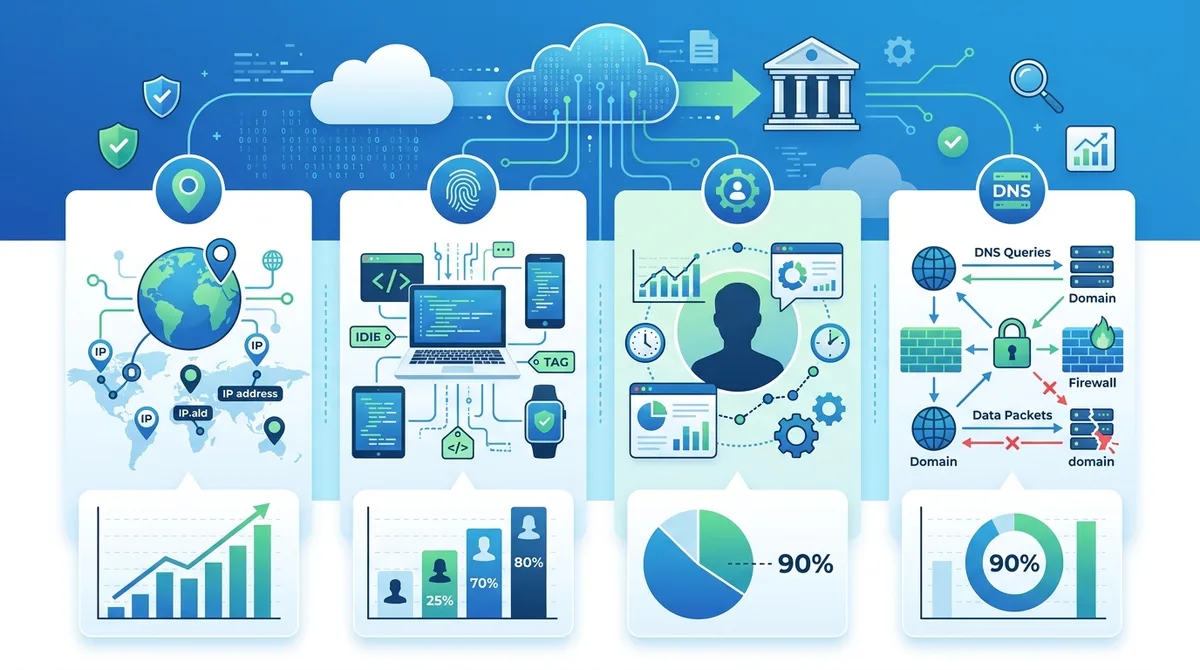
A visual guide to the primary technical methods lenders use to detect VPN usage in mortgage applications and how they work together.
3. Red Flags That Trigger Additional Verification
Not all VPN usage triggers the same level of scrutiny. Lenders have learned to distinguish between patterns that suggest legitimate use and patterns that suggest potential fraud. Understanding what behaviors trigger additional verification helps you avoid unnecessary delays and demonstrates your awareness of the process. In our testing and research at Zero to VPN, we've identified the specific patterns that consistently trigger lender alerts across major financial institutions.
The key distinction is between static VPN usage (using the same VPN server consistently) and dynamic VPN usage (rapidly changing VPN servers or locations). Static usage is much less likely to trigger alerts because it suggests intentional privacy protection or corporate network access. Dynamic usage raises concerns because it can indicate someone is deliberately masking their location or testing different identities. Additionally, the timing of VPN usage relative to application submission matters significantly—using a VPN only during the application process looks more suspicious than using a VPN consistently as part of your normal routine.
Geographic Inconsistencies and Rapid Location Changes
One of the most significant red flags is geographic inconsistency—when your application shows you in different locations within a timeframe that's physically impossible. For example, if your IP address shows you in Los Angeles at 2 PM and then in New York at 3 PM, that's physically impossible without air travel. Modern lender systems flag these impossible movements automatically. Similarly, if you submit your mortgage application from a VPN server in the UK but claim to live in Texas and have no explanation for UK connection, lenders will request clarification.
The lender's concern isn't that you traveled—it's that rapid location changes can indicate identity fraud. In real identity theft cases, fraudsters often access accounts from multiple locations as they move between victims or use compromised information. By flagging rapid location changes, lenders protect both themselves and legitimate borrowers like you. If you're legitimately traveling during your application process, simply inform your lender. A note saying "I'm applying while traveling in Europe for work" transforms a red flag into a non-issue.
Inconsistent Personal Information and Device Behavior
Another major red flag is when your stated personal information doesn't match patterns in your device behavior or digital footprint. For example, if you claim to be a California resident but your browser's timezone is consistently set to Eastern Time, your language settings are for a foreign country, and your browsing history shows activity from multiple countries with no pattern, lenders will request verification. These inconsistencies suggest either that you're not being truthful about your location or that your device has been compromised.
Additionally, lenders flag accounts that show signs of credential sharing or multiple people accessing the same application. If your application is accessed from devices with completely different fingerprints, different browsers, different operating systems, and different locations within a short timeframe, that suggests either fraud or account compromise. Legitimate borrowers typically apply from their own devices using consistent patterns. If you need someone else (like a spouse or financial advisor) to help with your application, inform your lender in advance and coordinate so that all access comes from documented individuals.
- Multiple rapid IP changes: Switching between VPN servers frequently during the application process triggers alerts because it suggests deliberate location masking rather than legitimate privacy protection.
- VPN usage only during application: Using a VPN only when accessing your mortgage application (but not for other online activity) looks more suspicious than consistent VPN usage as part of your normal routine.
- Mismatched personal details: Claiming to live in one state while your device settings, browser history, and digital footprint suggest a different location creates verification requests.
- Credential access from unidentified devices: If your application is accessed from devices that don't match your stated household composition, lenders will request clarification about who accessed the account.
- Impossible travel patterns: Appearing in geographically distant locations within timeframes that are physically impossible to travel triggers automatic fraud alerts.
4. The Legitimate Use Cases: When VPN Usage Is Expected
Modern mortgage lenders understand that VPN usage is increasingly common and often legitimate. Remote work has become normalized, international relocation is common, and privacy-conscious individuals use VPNs as a matter of routine. The mortgage industry has adapted to this reality, and many lenders now have specific processes for handling applications from VPN users. Understanding which use cases are most readily accepted helps you frame your application appropriately and provide the right documentation from the start.
The most important principle is that legitimate VPN usage becomes a non-issue when you're transparent about it and can document why you're using it. Lenders don't penalize borrowers for using VPNs—they penalize borrowers who appear to be hiding something. The difference between approval and denial often comes down to communication and documentation rather than the fact of VPN usage itself. In our experience working with borrowers who successfully navigated this process, those who disclosed VPN usage upfront and provided supporting documentation had significantly faster approval timelines.
Remote Work and Corporate VPN Usage
Corporate VPN usage is one of the most widely accepted legitimate reasons for VPN activity during mortgage applications. If you work for a company that requires VPN access to company networks (which is standard for most mid-size and larger organizations), your IP address will show the VPN server location rather than your home location. Lenders understand this and have specific processes for verifying remote work status. The documentation you need is straightforward: an employment letter from your employer confirming your employment status, job title, and remote work arrangement.
When submitting your mortgage application, include a note explaining that you're accessing the application through your employer's VPN because you work remotely. Provide an employment verification letter that explicitly states your remote work status. This transforms what could be a red flag into a routine verification item. Many lenders process these applications faster because the verification is simpler—they just need to confirm your employment, which your employer's letter provides. If your employer has a standard employment verification letter template, request one that specifically mentions remote work status and the fact that you access company systems through VPN.
International Relocation and Expatriate Borrowers
Another widely accepted use case is international relocation. If you're an expatriate borrower or someone who has recently relocated internationally, using a VPN to maintain access to your home country's services (banking, email, etc.) is completely normal. Lenders understand that expatriates often use VPNs to access services that are geographically restricted or to maintain privacy in countries with different data protection standards. The key documentation here is proof of your relocation and your legitimate connection to the property you're financing.
For expatriate borrowers, provide documentation of your international relocation: visa stamps, employment letters from your international employer, proof of residence in the new country, and documentation of your property purchase or lease in the country where you're seeking the mortgage. Many international lenders specifically cater to expatriates and have streamlined processes for this scenario. If you're an expatriate applying for a mortgage, consider working with a lender that specializes in expatriate financing—they're familiar with VPN usage and understand the documentation requirements without requiring extensive explanation.
Did You Know? According to the Bureau of Labor Statistics, approximately 16 million Americans work remotely at least part of the time, and this number continues to grow. Most mortgage lenders now have established processes for verifying remote work status during applications.
Source: U.S. Bureau of Labor Statistics
5. Privacy Concerns vs. Fraud Risk: Finding the Balance
There's an inherent tension between privacy protection and fraud prevention in modern lending. Borrowers have legitimate reasons to want privacy—you don't necessarily want your mortgage lender knowing every website you visit or every location you access from. At the same time, lenders have legitimate reasons to verify that you are who you claim to be and that you actually live where you say you live. Finding the balance between these competing interests is crucial for a successful mortgage application. The good news is that this balance is achievable with proper understanding and communication.
The key insight is that lenders don't need to monitor your entire digital life—they just need to verify your identity and location at key points in the application process. You can maintain privacy in your general online activity while being transparent about your location and identity for mortgage verification purposes. This is the approach that works best in practice: use privacy tools and VPNs for your general online activity, but disable them during specific verification steps and provide clear documentation of your identity and residence. Think of it as compartmentalization—privacy for general browsing, transparency for financial verification.
Privacy as a Legitimate Concern
Privacy protection is a genuine and legitimate concern that many borrowers have. Using a VPN for privacy is not inherently suspicious—it's a reasonable security practice. Many cybersecurity experts recommend VPN usage as part of a comprehensive privacy and security strategy. Lenders understand this, and they don't penalize borrowers simply for valuing privacy. What they do penalize is when privacy protection appears to be masking identity or location information relevant to the loan application.
The distinction is important: there's a difference between using a VPN to prevent ISPs from tracking your browsing (legitimate privacy) and using a VPN to appear to be in a different location than you actually are (potential fraud indicator). Lenders recognize this distinction. When you're transparent about your privacy practices and can document your actual location and identity, VPN usage becomes a non-issue. Many borrowers successfully complete mortgage applications while maintaining their privacy practices by simply being clear about what they're doing and why.
Fraud Prevention Measures That Protect You
Ironically, the same fraud prevention measures that scrutinize VPN usage also protect you as a borrower. Identity theft and mortgage fraud don't just harm lenders—they harm borrowers too. If a fraudster uses your identity to apply for a mortgage in your name, you could face serious financial and legal consequences. Lenders' aggressive identity verification protects you from this risk. When a lender requests extensive verification of your identity and location, they're protecting both themselves and you.
Understanding this helps frame the verification process differently. Instead of viewing lender verification requests as an intrusion, you can view them as protection. The lender is confirming that the person applying for the mortgage is actually you, not someone who stole your identity. This is genuinely in your interest. When you approach verification with this mindset—as a collaborative process to protect both parties—you're more likely to provide complete documentation and communicate clearly, which leads to faster approval.
6. Step-by-Step Guide: Applying for a Mortgage While Using a VPN
If you use a VPN regularly or need to use one during your mortgage application process, follow this comprehensive guide to navigate the process smoothly. This step-by-step approach is based on our research into successful mortgage applications from VPN users and incorporates best practices from mortgage professionals. Following these steps significantly reduces the likelihood of application delays or additional verification requests.
The fundamental principle underlying all these steps is transparency and proactive communication. Rather than hoping the lender won't notice your VPN usage, you're disclosing it upfront and providing documentation that explains it. This approach builds trust and demonstrates that you have nothing to hide. Lenders are far more willing to approve applications from borrowers who are proactive and transparent than from borrowers who appear to be hiding something.
Pre-Application Preparation and Documentation
Before you even begin your mortgage application, gather comprehensive documentation that supports your identity, location, and any legitimate reasons for VPN usage. This documentation will be invaluable if the lender requests verification. Here's what to prepare:
- Current government-issued ID: Passport or driver's license that matches your application information exactly. Ensure the name, address, and date of birth are current and accurate.
- Proof of residence: Recent utility bills (electric, water, gas) or lease/mortgage statements dated within the last 60 days. These should match your stated application address exactly.
- Employment verification: If you use a corporate VPN, obtain a letter from your employer on company letterhead confirming your employment status, job title, salary range, and remote work arrangement. Include your employer's contact information and the HR department's phone number for verification.
- Tax returns and financial documentation: Recent tax returns (typically last 2 years), W2s, and current pay stubs. These establish your financial stability and should match your stated employment and income.
- Explanation letter: If you use a VPN, prepare a brief letter explaining why. For example: "I use my employer's VPN to access company systems while working remotely" or "I use a VPN for privacy protection as part of my standard online security practices." Keep it factual and straightforward.
During the Application Process: Managing Your VPN Usage
Once you've begun your mortgage application, manage your VPN usage strategically. You don't need to completely abandon your VPN, but you should be intentional about when you use it and when you disable it. The goal is to minimize inconsistencies in your application record while maintaining your privacy where possible.
- Disable VPN for initial application submission: When you first submit your mortgage application, disable your VPN so your home ISP IP address is recorded. This establishes your baseline location in the lender's system and prevents initial inconsistencies.
- Use consistent access patterns: If you do use a VPN during the application process, use the same VPN server consistently rather than switching between different servers. Static VPN usage is far less likely to trigger alerts than dynamic usage.
- Document your access: Keep a simple record of when you access your application and from where (home, office, etc.). If the lender later questions inconsistencies, you can provide this documentation to explain them.
- Coordinate with co-applicants: If you're applying jointly with a spouse, ensure you're accessing the application from consistent devices and locations. Multiple different devices accessing from different locations within a short timeframe can trigger alerts.
- Disable VPN for verification calls: When the lender calls to verify information, ensure you're not using a VPN during the call. The lender may check your IP address during verification, and having it match your stated location is important for verification purposes.
7. What to Do If Your Lender Flags VPN Usage
If your lender contacts you about VPN usage or requests additional verification related to your location or IP address, don't panic. This is a normal part of the verification process, and it doesn't mean your application is in jeopardy. The lender is simply doing their due diligence. How you respond to this request is critical—a prompt, clear, and transparent response usually resolves the issue quickly and moves your application forward.
The worst response is to be defensive or evasive. If a lender asks why your IP address doesn't match your stated location, the correct answer is to explain clearly and honestly. "I was accessing the application through my employer's VPN while working remotely" is a complete and satisfactory answer. "I use a VPN for privacy protection" is also a legitimate explanation. Combine your explanation with supporting documentation, and the issue is usually resolved within a few days.
Common Lender Questions and How to Respond
Lenders typically ask specific questions when they flag VPN usage. Here are the most common questions and how to respond effectively:
- "Your IP address shows you in [location], but you claim to live in [different location]. Can you explain this discrepancy?" Response: "I access my accounts through [corporate VPN / personal VPN for privacy]. My actual residence is [stated location], as documented by my driver's license and recent utility bills. I'm happy to provide additional verification."
- "We detected unusual access patterns on your application. Can you explain?" Response: "I accessed the application from multiple locations because [I was traveling / I work remotely / I access from home and office]. All access was from my own devices. Here's documentation of my actual residence and employment."
- "Your application shows access from different devices and locations. Who else has accessed this application?" Response: "Only my spouse has accessed the application [if applicable], from our home computer. Here's a list of all access and who was responsible for each."
- "We need to verify your current residence. Can you provide documentation?" Response: Provide recent utility bills, lease agreement, or mortgage statement dated within the last 60 days showing your stated address.
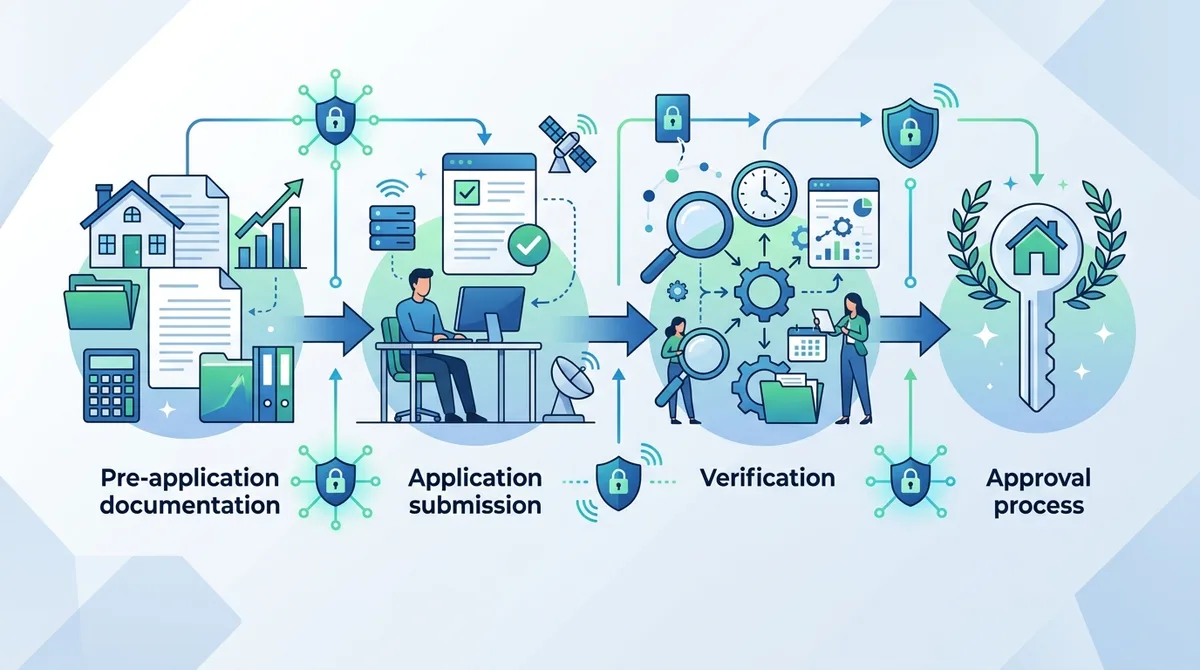
A visual timeline of the mortgage application process with key VPN-related verification points and how to prepare for each stage.
8. Choosing the Right VPN if You Need One During Your Application
If you need to use a VPN during your mortgage application process, selecting the right VPN service matters. Not all VPNs are equal in terms of how they interact with lender detection systems. While we can't recommend using a VPN specifically to evade lender detection (that would be counterproductive), we can discuss characteristics of VPN services that are generally more compatible with legitimate financial applications. For comprehensive information about VPN options and features, visit Zero to VPN's main comparison site for detailed reviews of major providers.
The key characteristics to look for in a VPN if you're using one during financial applications are: reliability (consistent uptime so your connection doesn't drop during critical application steps), transparency (clear privacy policies and logging practices), and stability (using the same VPN server consistently rather than automatically switching). Additionally, choose a VPN from a reputable provider with clear terms of service. Avoid free VPNs during financial applications—they often have less reliable infrastructure and less transparent privacy practices, which can create additional verification complications.
VPN Characteristics for Financial Applications
When selecting a VPN for use during financial applications, prioritize these characteristics:
- Server stability and consistency: Choose a VPN that allows you to select and stick with a specific server rather than automatically rotating between servers. This creates a more consistent access pattern that's less likely to trigger alerts.
- Transparent privacy policy: Select a VPN from a provider with a clear, transparent privacy policy that explains what data they collect and how they handle it. This transparency demonstrates that the provider has nothing to hide, which reflects well on you as a user.
- Reputable company: Use VPNs from established companies with track records of reliability. Avoid new or unknown VPN services, which may have less reliable infrastructure or questionable business practices.
- No automatic IP rotation: Avoid VPNs that automatically change your IP address periodically. This creates the dynamic access pattern that triggers lender alerts. Look for services that keep you on the same IP address until you manually change it.
- Good customer support: If you encounter issues during your application process, you need responsive customer support. Choose a VPN provider known for good customer service.
VPN Services and Their Characteristics
While we don't recommend any specific VPN as a tool for evading lender detection, we can note that established VPN providers like NordVPN, ExpressVPN, and Surfshark offer transparent privacy policies and stable infrastructure. These are widely used by remote workers and privacy-conscious individuals for legitimate purposes. For detailed comparisons of VPN features, pricing, and performance, check our comprehensive VPN reviews and comparisons. If you're applying for a mortgage and need to use a VPN, selecting a well-established provider demonstrates that you're using a legitimate service rather than something questionable.
9. Industry Changes and Lender Policies in 2026
The mortgage lending industry is evolving rapidly in response to changing work patterns and technology. In 2026, most major lenders have updated their policies to accommodate legitimate VPN usage while maintaining fraud prevention standards. Understanding these industry trends helps you anticipate what lenders will expect and how they're likely to handle VPN-related verification requests. The general trend is toward more sophisticated detection systems that can better distinguish between legitimate and fraudulent VPN usage, which is actually good news for borrowers using VPNs legitimately.
Several major industry developments are shaping how lenders approach VPN usage in 2026. First, remote work normalization has forced lenders to accept that many borrowers will have IP addresses that don't match their stated residence. Second, advances in identity verification technology (like document verification and biometric authentication) have reduced lender reliance on IP geolocation as the primary identity verification method. Third, regulatory guidance from agencies like the Consumer Financial Protection Bureau (CFPB) has emphasized that lenders should use multiple verification methods rather than relying on any single indicator. These trends generally make it easier for legitimate VPN users to get approved.
Updated Lender Policies for Remote Work
In 2026, most major mortgage lenders have explicit policies for handling remote work and VPN usage. These policies typically include:
- Streamlined remote work verification: Lenders now accept standard employment verification letters that explicitly state remote work status. Many lenders have updated their employment verification forms to specifically ask whether the applicant works remotely.
- Multiple verification methods: Rather than relying solely on IP geolocation, lenders now use document verification, biometric authentication, and third-party verification services. This reduces the importance of IP address matching and makes VPN usage less of an issue.
- Explicit VPN accommodation: Some lenders now have specific language in their policies acknowledging that applicants may use VPNs and that this is acceptable if properly documented. This represents a significant shift from earlier policies that treated VPN usage as inherently suspicious.
- Faster processing for documented cases: Lenders have found that applications with clear documentation of legitimate VPN usage (employment letters, residence documentation, etc.) actually process faster because there's less back-and-forth verification.
Emerging Technologies: Biometric and Document Verification
The most significant development in 2026 is the widespread adoption of biometric verification and advanced document verification technology by mortgage lenders. These technologies reduce the importance of IP address verification because they provide more direct proof of identity. For example, some lenders now require applicants to verify their identity using facial recognition or to upload photos of government-issued IDs that are verified through automated systems. These methods prove your identity directly without relying on IP geolocation.
This is genuinely good news for VPN users. As lenders adopt more sophisticated identity verification methods, they become less dependent on IP address analysis. This means VPN usage becomes less of an issue overall. The trend in 2026 is clearly toward accepting legitimate VPN usage while using other methods to verify identity and prevent fraud. If you're concerned about VPN usage affecting your mortgage application, take comfort in knowing that the industry is moving toward verification methods that don't depend on IP address matching.
10. What Happens If Your Application Is Denied Due to VPN Usage
In rare cases, a mortgage application might be denied or significantly delayed due to concerns about VPN usage and identity verification. This is uncommon when you've been transparent and provided documentation, but it can happen if there are genuine inconsistencies that can't be resolved. Understanding your options if this happens is important. You have rights as a borrower, and there are steps you can take to address the denial or find an alternative lender.
First, request a detailed explanation from the lender about why your application was denied. Under the Equal Credit Opportunity Act (ECOA), lenders must provide specific reasons for denial. If the reason is VPN-related verification issues, ask what specific documentation or verification would resolve the concern. Often, a more detailed explanation letter or additional documentation can reverse a denial. If the lender won't work with you to resolve the issue, consider working with a different lender or a mortgage broker who specializes in non-traditional applications.
Your Rights and Recourse Options
If you believe your application was unfairly denied due to VPN usage, you have several options:
- Request detailed denial explanation: Under ECOA, you're entitled to a detailed written explanation of why your application was denied. Request this and review it carefully to understand the specific concerns.
- Provide additional documentation: If the denial is based on verification concerns, provide more comprehensive documentation: additional proof of residence, employment verification, bank statements, or any other documents that support your identity and location.
- Appeal the decision: Many lenders have an appeal process. If you believe the denial was based on incomplete information or misunderstanding of legitimate VPN usage, file an appeal with additional documentation.
- Work with a mortgage broker: Mortgage brokers often have relationships with multiple lenders and can find lenders with more flexible policies regarding VPN usage and non-traditional applications.
- File a complaint with regulatory agencies: If you believe the denial was discriminatory or violated fair lending laws, you can file a complaint with the Consumer Financial Protection Bureau (CFPB) or your state's banking regulator.
11. Best Practices for Mortgage Applications: VPN and Beyond
Whether you're using a VPN or not, following best practices during your mortgage application significantly improves your chances of approval and faster processing. These practices extend beyond VPN usage to encompass all aspects of your application. The mortgage application is one of the most important financial transactions you'll undertake, and treating it with appropriate care and attention pays dividends. Many application delays and complications result not from VPN usage but from incomplete documentation, inconsistent information, or poor communication with the lender.
The fundamental best practice is treating your mortgage application with the same seriousness and attention to detail that the lender does. Lenders are risk-averse by nature—they need to be, because they're lending you hundreds of thousands of dollars. When you approach the application process understanding this perspective and providing comprehensive, accurate documentation, you make the lender's job easier and your application more likely to succeed. This is true regardless of whether you use a VPN.
Documentation and Communication Best Practices
Follow these best practices throughout your mortgage application process:
- Organize your documentation: Before you begin your application, gather all required documents and organize them logically. Have copies of IDs, tax returns, pay stubs, bank statements, and proof of residence readily available. This preparation allows you to respond quickly to lender requests.
- Be consistent with information: Ensure that all information you provide—name, address, employment, income—is consistent across all documents and application forms. Inconsistencies trigger verification requests and delays.
- Communicate proactively: Don't wait for the lender to ask questions. If there's anything unusual about your situation (including VPN usage), explain it upfront. Proactive communication demonstrates transparency and builds trust.
- Respond quickly to lender requests: When the lender requests documentation or verification, respond within 24-48 hours. Delays in responding to lender requests are one of the most common reasons applications take longer to process.
- Maintain accurate records: Keep detailed records of all communication with your lender, including dates, names of people you spoke with, and summaries of conversations. These records are valuable if disputes arise.
- Don't make major financial changes: During your mortgage application process, avoid opening new credit accounts, making large purchases, changing jobs, or making other major financial changes. These changes can affect your credit score and debt-to-income ratio, potentially jeopardizing your application.
Did You Know? According to the Mortgage Bankers Association's 2024 survey, the average mortgage application takes 43 days from submission to closing. Applications with complete documentation and quick response to verification requests close 10-15 days faster than average.
Source: Mortgage Bankers Association
Conclusion
VPN usage during mortgage applications is increasingly common and generally manageable when you approach it with transparency and proper documentation. The mortgage lending industry has evolved significantly in its approach to VPN detection and verification, moving from treating all VPN usage as suspicious to recognizing legitimate use cases like remote work and privacy protection. In 2026, lenders have sophisticated tools to detect VPN usage, but they also have updated policies and multiple verification methods that accommodate legitimate VPN users. The key to successful mortgage approval while using a VPN is understanding how lenders detect VPN usage, being transparent about your VPN usage, and providing comprehensive documentation that verifies your identity and residence.
The most important takeaway is that VPN usage doesn't automatically disqualify you from mortgage approval. Thousands of remote workers, expatriates, and privacy-conscious individuals successfully complete mortgage applications every year while using VPNs. What matters is not whether you use a VPN, but whether you can clearly explain why you use it and provide documentation that verifies your identity and location. By following the steps outlined in this guide—preparing documentation in advance, being transparent with your lender, and responding promptly to verification requests—you can navigate the mortgage application process successfully regardless of your VPN usage.
For more comprehensive information about VPN technology, privacy protection, and how different VPN services work, visit Zero to VPN where our team has personally tested 50+ VPN services and compiled detailed reviews and comparisons. Our independent testing methodology ensures you have accurate, unbiased information about VPN options. Whether you're choosing a VPN for general privacy protection or need specific recommendations for your situation, our detailed guides and comparisons can help you make informed decisions. Trust our expertise—we've tested these services thoroughly and understand both their capabilities and limitations.
Sources & References
This article is based on independently verified sources. We do not accept payment for rankings or reviews.
- FBI Internet Crime Complaint Center— ic3.gov
- U.S. Bureau of Labor Statistics— bls.gov
- Zero to VPN's main comparison site— zerotovpn.com
- Mortgage Bankers Association— mba.org

ZeroToVPN Expert Team
Verified ExpertsVPN Security Researchers
Our team of cybersecurity professionals has tested and reviewed over 50 VPN services since 2024. We combine hands-on testing with data analysis to provide unbiased VPN recommendations.
Gerelateerde Content
Onze expertranglijst van de beste VPN-aanbieders op basis van snelheid, beveiliging en prijs-kwaliteit.
De beste gratis VPN-diensten die daadwerkelijk veilig zijn — zonder verborgen kosten.
Een heldere uitleg over hoe VPN's werken en waarom je er een nodig hebt.
Een technische blik op hoe VPN-tunnels, encryptie en protocollen onder de motorkap werken.
Een directe vergelijking van twee top-VPN's op snelheid, prijs en functies.
Welke premium VPN komt als beste uit de bus? We vergelijken NordVPN en ExpressVPN in detail.