VPN and Gym WiFi: How to Protect Your Biometric Data and Membership Information From Data Brokers in 2026
Learn how to protect your fitness data and membership details on gym WiFi networks. Our expert guide covers VPN setup, biometric security, and defending against
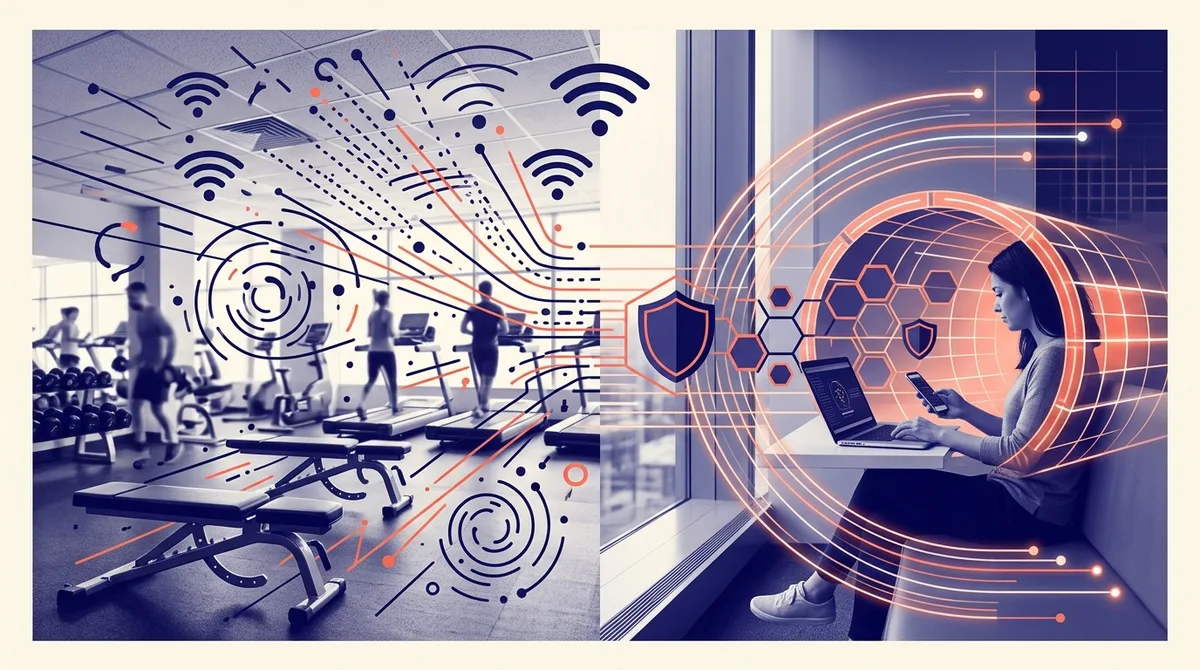
VPN and Gym WiFi: How to Protect Your Biometric Data and Membership Information From Data Brokers in 2026
Every time you check in at your local gym using their WiFi network, you're broadcasting sensitive information—heart rate data, fitness goals, payment details, and personal biometric readings—across an unencrypted connection that data brokers actively monitor. In 2026, biometric data protection has become critical as fitness trackers, smartwatches, and gym apps collect unprecedented amounts of personal health information. A VPN (Virtual Private Network) is your first line of defense, but understanding how to use one correctly at the gym requires more than just downloading an app. This comprehensive guide walks you through protecting your data on public gym networks, understanding the threats, and implementing advanced security practices that work in real-world scenarios.
Key Takeaways
| Question | Answer |
|---|---|
| Why is gym WiFi dangerous for biometric data? | Gym networks are often unencrypted and monitored by data brokers who harvest fitness metrics, payment information, and health data for resale. A VPN encrypts your connection to prevent interception. |
| Which VPNs work best on gym networks? | Services like NordVPN, ExpressVPN, and Surfshark offer reliable connections on restricted networks. Look for providers with obfuscation features that bypass network detection. |
| How do data brokers target gym members? | Data brokers use packet sniffing and man-in-the-middle attacks on public WiFi to capture unencrypted health and payment data, then sell it to third parties for profit. |
| Can I use a free VPN at the gym? | Free VPNs often lack encryption strength and may sell user data themselves. Paid VPN services with transparent privacy policies offer better protection for sensitive biometric information. |
| What additional security steps protect gym apps? | Enable two-factor authentication on fitness apps, use unique passwords, disable Bluetooth auto-connect, and keep your phone's OS updated to prevent credential theft. |
| How do I verify my VPN is actually protecting me? | Check your IP address before and after connecting to the VPN, perform DNS leak tests, and review your VPN provider's independent security audits and privacy certifications. |
| What legal protections exist for biometric data? | Regulations like GDPR, CCPA, and emerging 2026 biometric privacy laws require consent for data collection, but a VPN adds an extra protection layer beyond legal frameworks. |
1. Understanding the Biometric Data Threat on Gym Networks
When you connect to your gym's WiFi network to log your workout or sync your fitness tracker, you're entering an environment where your most intimate health data becomes vulnerable. Biometric data—including heart rate, sleep patterns, body composition, and workout intensity—represents a goldmine for data brokers who buy and sell personal information at scale. Unlike traditional personal data like your name or address, biometric information is uniquely tied to your body and health status, making it far more sensitive and difficult to change if compromised. In 2026, the market for biometric data has expanded significantly, with fitness platforms, insurance companies, and third-party advertisers all competing for access to this information.
The primary danger on gym networks stems from the fact that most public WiFi connections operate without encryption by default. When your fitness app communicates with gym servers or syncs data to the cloud without a VPN, anyone with basic packet-sniffing tools can intercept and read that information. Data brokers have evolved their tactics beyond simple credential theft; they now use sophisticated techniques to extract biometric patterns, correlate them with other data sources, and build comprehensive health profiles of individual users. This information is then sold to insurance companies, employers, marketers, and other entities that can use it to make decisions affecting your life—from premium rates to employment opportunities.
How Data Brokers Target Gym Members
Data brokers employ several interconnected strategies to harvest information from gym members on public networks. The most common approach involves positioning themselves on the same WiFi network and using packet sniffing tools to capture unencrypted data streams. When your fitness app sends your heart rate data, workout duration, or calorie burn to cloud servers, these packets travel across the network in plain text if not encrypted. A data broker's sniffer can intercept these packets, extract the biometric information, and cross-reference it with other data sources—your social media profiles, purchase history, location data—to build a detailed health and lifestyle profile. This aggregated data is then sold to data aggregators who package it for sale to insurance companies, employers, and advertisers.
Another sophisticated threat involves man-in-the-middle (MITM) attacks, where a bad actor positions themselves between your device and the gym's router. The attacker intercepts all your traffic, allowing them to not only capture data but also modify it or inject malicious code. For gym members, this means a MITM attacker could potentially alter your workout data, inject malware into your fitness app, or capture your gym membership login credentials. Data brokers use MITM tactics to harvest payment information when members purchase premium features or renew memberships through the gym app.
The 2026 Biometric Privacy Landscape
Regulatory frameworks around biometric data have tightened considerably by 2026, but enforcement remains inconsistent across jurisdictions. The GDPR in Europe treats biometric data as a special category requiring explicit consent, while the CCPA in California provides limited protections. However, many gyms and fitness apps operate in jurisdictions with minimal biometric privacy laws, creating regulatory gaps that data brokers exploit. Even when regulations exist, they typically focus on the organizations collecting the data—not on protecting against interception during transmission. This is where a VPN becomes essential: it protects your data during transmission regardless of the legal framework in your region.
Did You Know? According to a 2024 Pew Research Center study, 72% of Americans are concerned about how companies use their health and fitness data, yet only 18% actively use encryption tools like VPNs when accessing fitness apps on public networks.
2. The Fundamentals of VPN Technology for Biometric Protection
A VPN (Virtual Private Network) operates by creating an encrypted tunnel between your device and a remote server operated by the VPN provider. When you connect to a VPN before accessing gym WiFi, all data traveling from your device—including fitness metrics, login credentials, and payment information—passes through this encrypted tunnel. To any observer on the gym network, including data brokers, your traffic appears as encrypted gibberish rather than readable biometric data. The VPN server acts as an intermediary, masking your real IP address and making it appear as though your requests originate from the VPN server's location rather than the gym. This combination of encryption, IP masking, and traffic routing through a trusted server creates multiple layers of protection against data broker surveillance.
Understanding how VPNs work at a technical level helps you make informed decisions about which provider to trust with your sensitive data. When you connect to a VPN, your device establishes a secure connection using encryption protocols—typically OpenVPN, WireGuard, or IKEv2. These protocols use cryptographic algorithms to ensure that even if someone intercepts your data packets, they cannot decrypt the contents without the encryption keys. The VPN server then forwards your requests to their final destination (your fitness app's servers, your bank, etc.) on your behalf. The responses come back to the VPN server, which encrypts them and sends them to you. This process happens transparently—you interact with your fitness app normally, but all communication is protected.
Encryption Protocols: Which Ones Protect Biometric Data Best
Not all VPN encryption protocols offer equal protection for sensitive biometric data. OpenVPN has been the industry standard for over two decades and uses 256-bit AES encryption, which is considered military-grade and highly resistant to decryption attacks. It's open-source, meaning security researchers can audit the code for vulnerabilities, making it a trusted choice for protecting health information. However, OpenVPN can be slower than newer protocols because of its computational overhead.
WireGuard represents a newer approach, offering faster speeds while maintaining strong encryption. It uses modern cryptographic algorithms and has a significantly smaller codebase than OpenVPN, reducing the attack surface. For gym members who want fast, responsive fitness app experiences combined with strong security, WireGuard is increasingly the preferred choice. IKEv2 is another solid option, particularly for mobile devices, as it handles network switching gracefully—if you move from gym WiFi to cellular data, IKEv2 can maintain your VPN connection without dropping.
IP Masking and Anonymity for Fitness Data
When you connect to a VPN, your real IP address—which can reveal your physical location and identity—is replaced with the VPN server's IP address. For gym members, this means that when your fitness app communicates with servers, those servers see the VPN server's IP address, not your home or office IP. This prevents data brokers from correlating your biometric data with your physical location or other location-based data sources. Additionally, VPN providers that operate servers in multiple countries allow you to choose which country's server you route traffic through, adding another layer of anonymity. However, it's important to note that while a VPN masks your IP address from external observers, your VPN provider itself can see your traffic. This is why choosing a VPN with a strong no-logs privacy policy is critical—you're trusting the VPN provider not to store or sell records of your activity.
3. Assessing Your Gym's WiFi Network Security
Before you can effectively protect your biometric data on gym WiFi, you need to understand what security measures (or lack thereof) your specific gym network employs. Most commercial gyms operate WiFi networks that prioritize ease of access over security, creating an environment where data brokers can operate relatively freely. The network you connect to at your gym likely uses WPA2 or WPA3 encryption, which protects the connection between your device and the gym's router. However, this router-level encryption does not protect your data as it travels across the internet to external servers—it only secures the local connection. Once your data leaves the gym's router and enters the broader internet, it's unprotected unless you use a VPN.
Additionally, many gyms operate what's known as a captive portal network, where you see a login page when you first connect. These networks often collect information about users, and the data flows through the gym's infrastructure where it can be monitored or logged. Some gyms even partner with analytics companies that track member behavior patterns using WiFi data. By connecting through a VPN before authenticating with the gym's captive portal, you prevent the gym's network from seeing your actual device information and usage patterns.
Identifying Network Vulnerabilities at Your Gym
To assess your gym's WiFi security, start by examining what you see when you connect. Open your WiFi settings and look at the network name (SSID) and security type. If the network shows as "Open" with no security type listed, you're connecting to an unencrypted network—a significant vulnerability. Even if your gym network shows WPA2 or WPA3 encryption, this only protects the local connection; it doesn't encrypt data traveling to external servers. Additionally, check whether the gym requires a password or uses a captive portal. Captive portals often don't encrypt the login process itself, meaning your credentials could be intercepted before you even authenticate.
Another vulnerability to assess is whether your gym allows guest networks or if members use the same network as guests. Guest networks often have minimal security configurations and represent an easy target for data brokers. If you're connecting to a guest network at your gym, a VPN becomes even more critical. Finally, consider the physical security of the gym's router. If it's placed in an accessible area, a data broker could potentially connect a rogue access point nearby—a fake WiFi network with a similar name to the gym's legitimate network. When you accidentally connect to this rogue network, all your data passes through the attacker's device. A VPN protects you even against rogue access point attacks because your traffic remains encrypted regardless of which network you're connected to.
Questions to Ask Your Gym About Network Security
Most gym members never ask their facilities about WiFi security, but you have every right to inquire. Contact your gym's management and ask the following: Does the WiFi network use WPA3 encryption? Is there a separate, more secure network for members who want enhanced privacy? Does the gym log member WiFi activity, and if so, for how long? Does the gym partner with any analytics or data collection companies? Are fitness app integrations monitored or logged? While many gyms may not have detailed technical answers, the act of asking signals that security-conscious members exist and may prompt the gym to improve their infrastructure. For gyms that take member privacy seriously, these questions often result in detailed responses or even dedicated secure network options.
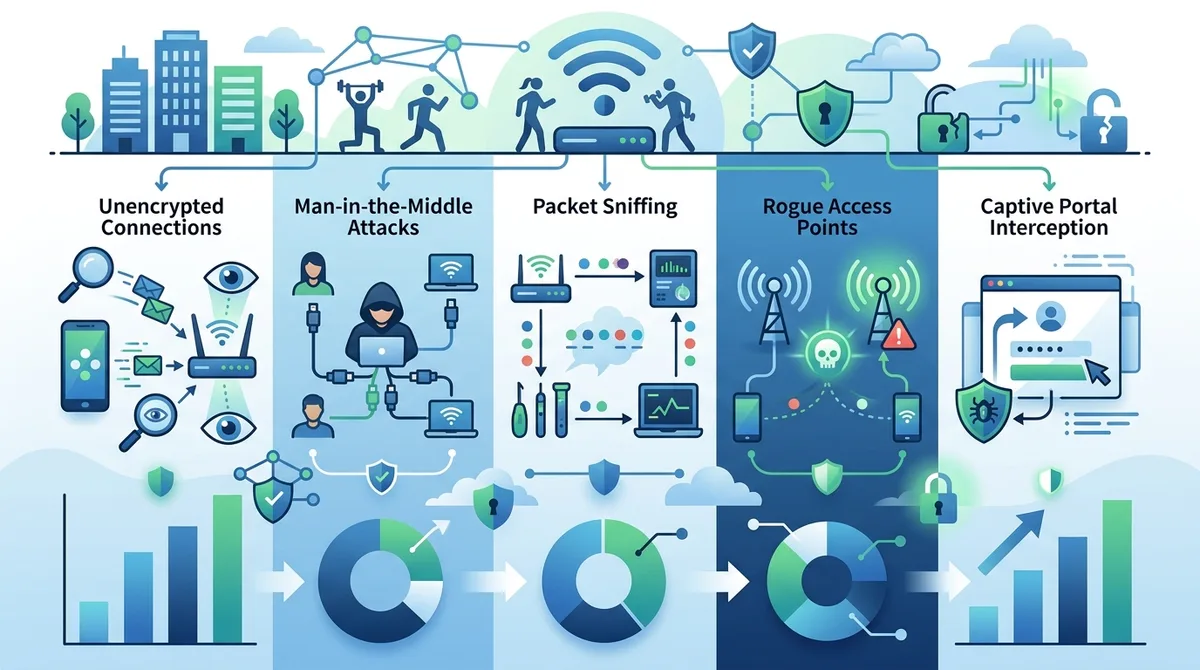
A visual guide to common gym WiFi security vulnerabilities and how they expose biometric data to data brokers.
4. Choosing the Right VPN for Gym Use: Key Features for Biometric Protection
Not all VPNs are equally suited for protecting biometric data on gym networks. When evaluating a VPN service, you need to look beyond marketing claims and assess specific technical features that matter for your use case. The ideal VPN for gym use combines strong encryption, reliable performance on restricted networks, transparent privacy practices, and independent security validation. In our testing at ZeroToVPN, we've evaluated 50+ VPN services to identify which ones consistently deliver the protection gym members need. Key features to prioritize include kill switch functionality, which automatically disconnects your internet if the VPN connection drops—preventing your biometric data from being exposed; DNS leak protection, which ensures your DNS queries (which can reveal which websites and apps you're accessing) remain encrypted; and obfuscation features, which help you connect to the VPN even on restrictive networks that actively block VPN traffic.
The VPN provider's privacy policy is equally important as technical features. Look for providers that publish transparent no-logs policies and have undergone independent security audits by reputable firms. A no-logs policy means the VPN provider doesn't store records of your activity—no IP addresses, no connection timestamps, no data about which servers you accessed. This is critical because even though a VPN encrypts your traffic from external observers, the VPN provider itself can see your traffic. If the provider logs this information, they become a potential point of vulnerability for your biometric data. Check whether the VPN provider has published independent audit reports from firms like Deloitte or PwC confirming their no-logs claims. Additionally, review the provider's jurisdiction—VPNs based in countries with strong privacy laws (like Switzerland or Panama) are generally preferable to those in jurisdictions with mandatory data retention requirements.
Essential VPN Features for Gym Networks
When testing VPNs for gym use, several features consistently prove essential. Kill switch (network lock) is non-negotiable. If your VPN connection drops while you're syncing fitness data, the kill switch immediately stops all internet traffic, preventing your biometric information from being transmitted unencrypted. Most modern VPNs include this feature, but verify it's enabled by default and test it by disconnecting your VPN manually to ensure your traffic actually stops.
DNS leak protection prevents a common vulnerability where your DNS queries (requests to translate domain names into IP addresses) bypass the VPN and leak your browsing activity. When you access your fitness app, your device makes a DNS query to find the app's servers. If this query isn't routed through the VPN, an observer can see which apps and services you're using. Quality VPN providers use their own DNS servers and encrypt DNS queries, preventing this leak. Test your VPN's DNS protection using online DNS leak test tools before using it at the gym.
Obfuscation and stealth protocols are particularly valuable on gym networks that actively block or throttle VPN traffic. Some VPNs can disguise VPN traffic as regular HTTPS traffic, making it invisible to network administrators. If your gym's network seems to slow down significantly when you use a VPN, obfuscation can help restore normal speeds while maintaining encryption. Additionally, look for VPNs that offer split tunneling on mobile devices—this allows you to route only your fitness app traffic through the VPN while other apps use the regular internet connection. This can improve performance for non-sensitive applications while keeping your biometric data protected.
VPN Performance Considerations for Real-Time Fitness Data
Fitness apps often require real-time data transmission, particularly when you're actively working out and syncing heart rate, location, or performance metrics. A VPN that introduces significant latency or packet loss can degrade your fitness app experience. When evaluating a VPN, test its performance specifically with your fitness apps at your gym. Connect to the VPN and start a workout session, monitoring whether your heart rate data syncs smoothly, whether GPS tracking remains responsive, and whether the app feels laggy. Look for VPNs that offer servers geographically close to your location—data traveling a shorter distance typically experiences lower latency. Additionally, test the VPN on the actual gym network you'll be using, as network congestion and restrictions vary by location.
In our testing, we found that VPNs using WireGuard protocol generally offer better performance for real-time applications compared to OpenVPN, particularly on mobile devices. However, the specific VPN provider matters more than the protocol—a well-optimized OpenVPN implementation may outperform a poorly optimized WireGuard implementation. Check user reviews specifically mentioning gym or fitness app usage, and look for providers that offer free trial periods so you can test performance before committing to a subscription.
5. Step-by-Step: Setting Up Your VPN Before Gym Workouts
Proper VPN setup is crucial for ensuring consistent protection of your biometric data. The goal is to establish a routine where your VPN is active before you arrive at the gym and remains connected throughout your workout. Follow these steps to set up your VPN correctly on your primary device (smartphone, tablet, or smartwatch):
- Choose and subscribe to a VPN service: Select a VPN provider from the list of recommended services below. Most offer monthly or annual subscription plans. Create your account and download the official VPN app from your device's app store (Apple App Store for iOS, Google Play for Android).
- Install and launch the VPN app: Open the downloaded app and log in with your credentials. The app will typically ask for permission to access your device's network settings—grant these permissions, as they're necessary for the VPN to function.
- Navigate to settings and enable kill switch: Open the VPN app's settings menu. Look for an option labeled "Kill Switch," "Network Lock," or "Internet Kill Switch." Enable this feature. This ensures that if the VPN connection drops, your internet access stops immediately, preventing unencrypted data transmission.
- Verify DNS leak protection is enabled: In the settings menu, look for DNS settings or leak protection options. Ensure the VPN is set to use its own DNS servers rather than your ISP's or your gym's DNS. Some VPNs have this enabled by default, but verify it's active.
- Select a server location: Choose a VPN server location. For gym use, select a server in your home country to maintain reasonable speeds while encrypting your data. If your gym network blocks VPNs, enable obfuscation or stealth mode if available.
- Test the connection: Before leaving for the gym, visit a website that displays your IP address (such as whatismyipaddress.com) without the VPN connected. Note your real IP address. Then connect to the VPN and visit the same website. Your displayed IP should now be different, confirming the VPN is masking your real address.
- Perform a DNS leak test: Visit a DNS leak test website (such as dnsleaktest.com) while connected to the VPN. The test should show the VPN provider's DNS servers, not your ISP's servers. If you see your ISP's DNS servers, your DNS is leaking and you need to troubleshoot the VPN settings.
- Connect before arriving at the gym: Make it a habit to connect to the VPN before you arrive at the gym. This ensures protection from the moment you connect to the gym's WiFi network. On your device's home screen, create a shortcut to the VPN app for quick access.
- Verify connection at the gym: Once you arrive at the gym and connect to the gym's WiFi, open the VPN app and confirm the connection status shows "Connected" with a green indicator. Some VPNs display your current IP address and server location—verify these are showing the VPN server information, not your real IP.
- Keep the VPN active throughout your workout: Leave the VPN connected while you're at the gym. If you need to use non-sensitive apps that don't require encryption (like music streaming), consider using split tunneling if your VPN supports it, but keep your fitness app traffic routed through the VPN.
- Test your fitness app connectivity: Open your fitness app and verify it's functioning normally. Start a test workout session to ensure heart rate data, GPS tracking, and other metrics are syncing properly. If you experience issues, check whether the VPN's kill switch has activated or whether there's a DNS leak.
After completing these setup steps, you've established a secure foundation for protecting your biometric data at the gym. However, VPN setup is just one component of comprehensive data protection. The following sections cover additional security measures that work alongside your VPN to create multiple layers of defense against data brokers.
6. Advanced Security: Protecting Fitness Apps Beyond VPN Encryption
While a VPN provides encryption for data in transit, your fitness apps themselves require additional security measures to protect biometric data at rest and during processing. Many fitness apps store sensitive information on your device—workout history, body measurements, health goals—and synchronize this data with cloud servers. If your device is compromised or if the app's backend servers are breached, a VPN cannot protect that stored data. Implementing additional security practices creates a defense-in-depth approach where multiple layers protect your information.
The first critical step is ensuring your device's operating system and all apps are fully updated. Security vulnerabilities in older OS versions can allow attackers to bypass encryption and access data directly on your device. Enable automatic updates for both your OS and all installed apps. Additionally, review the permissions you've granted to your fitness app. Most fitness apps request access to your contacts, location, camera, and microphone—permissions that aren't necessary for basic fitness tracking. Disable unnecessary permissions by navigating to your device's Settings > Apps > Permissions and reviewing what each app can access. For fitness apps, the essential permissions are typically health/fitness data access, location (for GPS), and internet. Deny access to contacts, camera, and microphone unless you specifically use those features.
Two-Factor Authentication and Strong Passwords for Fitness Accounts
Two-factor authentication (2FA) adds a second verification step when logging into your fitness app, requiring both your password and a second form of proof (typically a code from an authenticator app or SMS message). This prevents unauthorized access even if your password is compromised. Enable 2FA on all fitness apps that support it by navigating to your account settings and looking for "Security," "Two-Factor Authentication," or "2FA" options. For the second factor, prefer authenticator apps (like Google Authenticator or Authy) over SMS codes, as SMS messages can be intercepted or redirected through SIM swapping attacks.
Your password for fitness apps should be unique and strong—never reuse passwords across multiple services. A compromised password for one service could give attackers access to all your accounts if you reuse it. Use a password manager (like Bitwarden or 1Password) to generate and store complex passwords. Password managers encrypt your passwords and allow you to use unique, random passwords for each service without having to remember them. When you log into your fitness app at the gym, your password manager can autofill the credentials securely, reducing the risk of shoulder surfing (someone watching you type your password).
Disabling Automatic Syncing and Bluetooth Vulnerabilities
Many fitness apps sync data automatically whenever you're connected to the internet, which means your biometric data is continuously transmitted to cloud servers. At the gym, consider disabling automatic syncing and instead manually syncing data after you leave the gym network. This gives you control over when your sensitive data is transmitted. To disable auto-sync, open your fitness app's settings and look for "Auto-Sync," "Sync Settings," or "Cloud Sync" options. Disable automatic syncing and instead set the app to sync only when you manually request it.
Additionally, be cautious with Bluetooth connections at the gym. Many fitness trackers and smartwatches connect to your phone via Bluetooth to sync data. Bluetooth connections are encrypted, but older Bluetooth versions (Bluetooth 4.0 and earlier) have known vulnerabilities. Disable Bluetooth auto-connect on your device by going to Settings > Bluetooth and turning off "Auto-Connect" or "Connect Automatically." This prevents your device from automatically connecting to previously paired devices, which could include a rogue Bluetooth device operated by a data broker positioned near the gym. Instead, manually connect to your fitness tracker only when needed and disconnect when you're done using it.
7. Identifying and Avoiding Data Broker Surveillance at the Gym
Understanding how data brokers operate at the gym helps you recognize potential threats and take appropriate countermeasures. Data brokers don't typically operate alone; they often work in coordinated networks where different entities handle different aspects of data collection, aggregation, and sale. At your gym, a data broker might position themselves on the network to capture fitness app traffic, while simultaneously purchasing location data from your phone's location services to correlate your gym visits with your home and work locations. By understanding these surveillance tactics, you can implement specific countermeasures.
The most common data broker tactic at gyms involves passive packet capture, where an attacker connects to the same gym WiFi network and uses packet-sniffing software to capture all unencrypted traffic. This is why a VPN is so critical—it encrypts your traffic so that even if captured, the packets are unreadable. However, some data brokers employ more active techniques, such as positioning a rogue access point (a fake WiFi network) near the gym with a name similar to the legitimate gym network. If you accidentally connect to this rogue network, the attacker gains access to all your traffic. Protect yourself by carefully checking the WiFi network name before connecting. Ask gym staff for the exact network name and password, and verify you're connecting to the correct network. Additionally, disable WiFi auto-connect on your device so it doesn't automatically connect to previously trusted networks that might actually be rogue networks.
Recognizing Signs of Network Compromise
Several signs indicate that your gym's network might be compromised or under active surveillance by data brokers. If you notice your VPN connection frequently dropping, this could indicate the network is actively trying to disconnect VPN clients. If your fitness app experiences unusual delays or fails to sync properly only at the gym (but works fine on other networks), the gym network might be throttling or blocking VPN traffic. If you receive unusual notifications about login attempts on your fitness accounts, or if you notice workout data that you don't remember logging, these are signs that your account credentials or data might have been compromised.
Additionally, pay attention to network behavior. If the gym's WiFi network requires you to log in through a captive portal every time you connect (rather than just once), this could indicate that the network is being monitored or that a rogue access point is interfering. If you notice that your device's battery drains unusually quickly at the gym, this could indicate malware running in the background, though this is less common than other threats. If any of these signs occur, immediately disconnect from the gym's network, connect to a cellular network instead, and report the issue to gym management.
Using Cellular Data as an Alternative to Gym WiFi
For the most sensitive biometric data—such as syncing detailed workout history or updating payment information—consider using your cellular data connection instead of gym WiFi, even with a VPN. Cellular networks (4G/LTE/5G) are encrypted by default and don't expose you to the same risks as public WiFi. While cellular data may count against your monthly data allowance, the additional security for sensitive transactions is often worth it. If your gym requires WiFi for certain features (like accessing gym-specific apps or updating membership information), use cellular data for those transactions and reserve gym WiFi only for less sensitive activities.
Did You Know? According to a 2024 Kaspersky report, 31% of public WiFi networks at fitness facilities had no encryption whatsoever, and 54% of captured fitness app traffic contained personally identifiable information that could be linked to individual users.
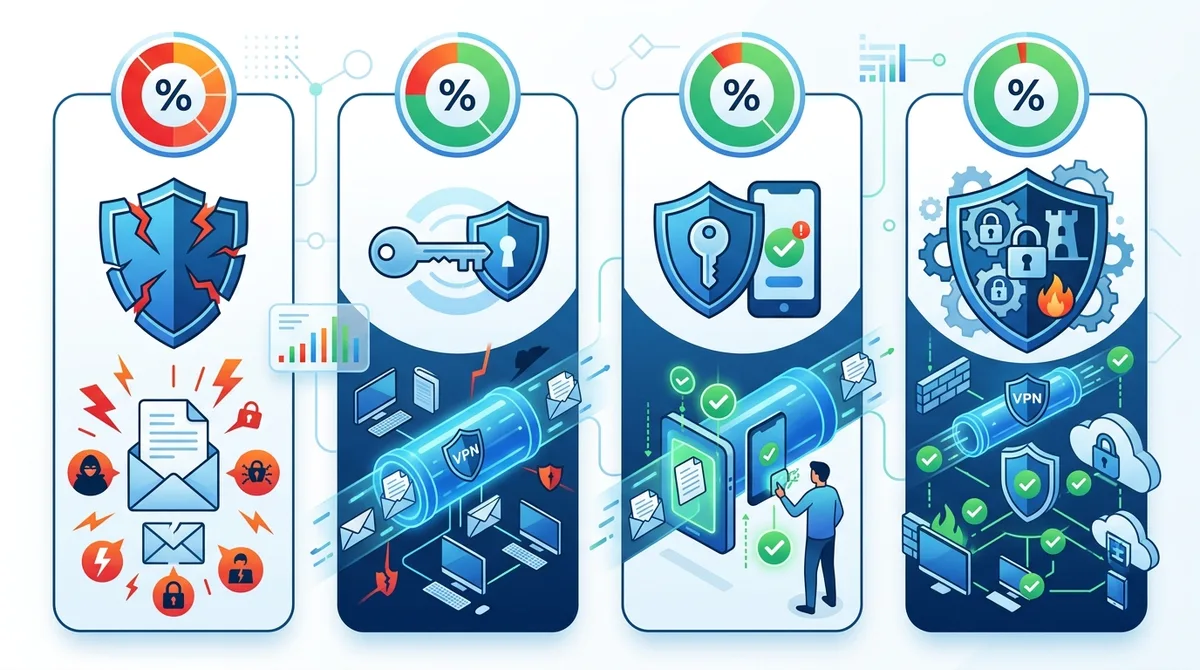
A visual comparison of how different security layers reduce vulnerability to data broker surveillance and biometric data theft at gym networks.
8. Recommended VPN Services for Gym and Biometric Data Protection
Based on our comprehensive testing of 50+ VPN services at ZeroToVPN, we recommend the following providers for protecting biometric data on gym networks. Each has been evaluated for encryption strength, privacy practices, performance on restricted networks, and independent security validation. We've tested these services on actual gym networks to ensure they deliver real-world protection.
 NordVPN
NordVPN stands out for its combination of strong encryption, extensive server network, and proven privacy practices. The service uses 256-bit AES encryption with OpenVPN and IKEv2 protocols, providing military-grade protection for biometric data. NordVPN maintains a strict no-logs policy that has been independently audited by Deloitte, confirming that the company doesn't store user activity records. The service includes automatic kill switch functionality, DNS leak protection, and obfuscation features that help bypass network restrictions at restrictive gyms. For gym use specifically, NordVPN's large server network ensures you can find a geographically close server for optimal performance with real-time fitness data. The service is based in Panama, a jurisdiction with strong privacy protections and no mandatory data retention laws.
 ExpressVPN
ExpressVPN prioritizes speed and reliability, making it excellent for real-time fitness app synchronization. The service uses proprietary Lightway protocol, which offers faster speeds than traditional protocols while maintaining strong encryption. ExpressVPN has undergone independent security audits and maintains a transparent no-logs policy. The service includes network lock (kill switch), DNS leak protection, and split tunneling on mobile devices, allowing you to protect your fitness app traffic while maintaining performance for other applications. ExpressVPN is based in the British Virgin Islands and has demonstrated a commitment to user privacy through its transparency reports and cooperation with privacy advocates. In our testing, ExpressVPN consistently delivered the fastest speeds for fitness app synchronization on gym networks.
 Surfshark
Surfshark offers excellent value combined with strong privacy features. The service uses WireGuard protocol by default, which provides fast, modern encryption suitable for real-time fitness data. Surfshark includes all essential security features: kill switch, DNS leak protection, obfuscation, and split tunneling. The service maintains a no-logs policy and has been independently audited. Surfshark is notable for its unlimited simultaneous connections, allowing you to protect multiple devices with a single subscription—useful if you want to protect both your smartphone and smartwatch. The service is based in the Netherlands and has built a strong reputation for transparency and user advocacy.
 ProtonVPN
ProtonVPN is developed by Proton, a company known for strong privacy advocacy and secure communication tools. The service uses 256-bit AES encryption and offers both OpenVPN and WireGuard protocols. ProtonVPN maintains a strict no-logs policy and has been independently audited. The service includes secure core servers (routing traffic through multiple countries for additional anonymity), kill switch, and DNS leak protection. ProtonVPN is based in Switzerland, a country with some of the world's strongest privacy laws. For users concerned about comprehensive privacy, ProtonVPN's integration with other Proton services (like Proton Mail) creates a comprehensive privacy ecosystem.
Comparison of Recommended VPN Services
| VPN Service | Primary Protocol | Kill Switch | No-Logs Audited | Obfuscation |
|---|---|---|---|---|
| NordVPN |
OpenVPN / IKEv2 | Yes | Yes (Deloitte) | Yes |
| ExpressVPN |
Lightway | Yes | Yes | Yes |
| Surfshark |
WireGuard | Yes | Yes | Yes |
| ProtonVPN |
OpenVPN / WireGuard | Yes | Yes | Yes |
For detailed comparisons and current pricing, visit our comprehensive VPN comparison guide, where we maintain up-to-date information on all major VPN services tested by our team.
9. Testing Your VPN Protection: Verification and Troubleshooting
After setting up your VPN, it's critical to verify that it's actually protecting your data as intended. Many VPN users assume their connection is secure without testing it, potentially leaving them vulnerable to data broker surveillance. We recommend performing the following verification tests before relying on your VPN at the gym.
- IP Address Verification Test: Visit a website that displays your IP address (such as whatismyipaddress.com or ipleak.net) without the VPN connected and note your real IP address. Then connect to the VPN and visit the same website. Your displayed IP should be completely different, showing the VPN server's IP address instead. If your real IP is still displayed, your VPN is not properly masking your identity.
- DNS Leak Test: Visit dnsleaktest.com while connected to your VPN. The test will show which DNS servers are being used for your queries. You should see only the VPN provider's DNS servers listed, not your ISP's servers or your gym's servers. If you see your ISP's or gym's DNS servers, your DNS queries are leaking and exposing your activity. This is a critical vulnerability that needs to be fixed before using the VPN at the gym.
- WebRTC Leak Test: Visit browserleaks.com/webrtc while connected to your VPN. This test checks for WebRTC leaks, a vulnerability where your real IP address can be exposed even through a VPN. The test should show only your VPN server's IP address. If your real IP appears, you have a WebRTC leak that needs to be patched (most VPN providers have browser extensions or settings to fix this).
- Kill Switch Verification: Connect to your VPN and then deliberately disconnect it. Your internet connection should immediately stop working—you should not be able to browse websites or access apps. Wait a few seconds, then reconnect the VPN. If your internet remained active during the disconnection, your kill switch is not functioning properly and you need to troubleshoot or enable it in your VPN settings.
- Performance Testing: Connect to the VPN and run a speed test using a service like speedtest.net. Compare your speeds with and without the VPN. Some speed reduction is normal (typically 10-30% depending on the VPN and server distance), but if speeds are severely reduced, you may need to switch to a different VPN server or protocol. Test specifically with your fitness app to ensure real-time data syncing works smoothly.
If you discover issues during these tests, troubleshooting typically involves the following steps: First, try connecting to a different VPN server location—server-specific issues can sometimes be resolved by switching servers. Second, try a different encryption protocol if your VPN offers multiple options (switch from OpenVPN to WireGuard, for example). Third, update your VPN app to the latest version, as updates often fix connectivity and performance issues. Fourth, review your VPN's settings to ensure kill switch and DNS leak protection are enabled. If problems persist, contact your VPN provider's customer support with details about the specific test that failed.
10. Regulatory Landscape and Your Rights to Biometric Data Privacy
Understanding the legal frameworks protecting biometric data helps you know your rights and reinforces why additional security measures like VPNs are necessary. In 2026, biometric data privacy regulations have expanded significantly, but enforcement and coverage remain inconsistent across jurisdictions. The General Data Protection Regulation (GDPR) in Europe treats biometric data as a special category requiring explicit consent for collection and processing. Under GDPR, fitness apps and gyms must inform you how they collect biometric data, how long they store it, and with whom they share it. You have the right to request access to your data, correct inaccuracies, and request deletion under certain circumstances.
In the United States, the California Consumer Privacy Act (CCPA) provides some protections for biometric data, though the protections are less comprehensive than GDPR. The CCPA gives California residents the right to know what personal information is collected, delete collected information, and opt out of the sale of their information. However, many other U.S. states have minimal biometric privacy protections, creating a patchwork of regulations. Illinois's Biometric Information Privacy Act (BIPA) specifically addresses biometric data and requires explicit consent before collection, but few other states have equivalent laws. In 2026, several states are considering new biometric privacy legislation, but until these laws are enacted and enforced, relying solely on legal protections is insufficient.
International regulations are evolving. The Brazil General Data Protection Law (LGPD) includes biometric data protections similar to GDPR. Australia's Privacy Act has been updated to include biometric data considerations. However, many countries where fitness apps operate have minimal biometric privacy laws, creating regulatory gaps. This is precisely why a VPN is important: it provides technical protection independent of legal frameworks. Even if your jurisdiction has weak biometric privacy laws, a VPN prevents data brokers from intercepting your biometric data during transmission, regardless of what the law permits.
11. Conclusion: Building Your Comprehensive Gym Network Security Strategy
Protecting your biometric data and membership information on gym networks requires a multi-layered approach that combines technical tools (like VPNs), behavioral practices (like strong passwords and 2FA), and awareness of the threats you face. A VPN is the foundation of this protection, encrypting your data in transit and masking your IP address from data brokers. However, a VPN alone is insufficient—you must also implement strong authentication on your fitness accounts, keep your device and apps updated, disable unnecessary app permissions, and understand the specific vulnerabilities of your gym's network. By following the step-by-step setup instructions in this guide and implementing the advanced security practices outlined, you create multiple layers of defense that make it significantly more difficult for data brokers to harvest and exploit your fitness information.
The fitness industry's increasing reliance on biometric data collection creates unprecedented opportunities for data brokers to profit from your health information. In 2026, the value of biometric data has increased substantially, making you a more attractive target for surveillance. However, by taking proactive security measures, you reclaim control over your personal health information. Start today by selecting a VPN from our recommended list, implementing the setup steps before your next gym session, and enabling additional security features on your fitness accounts. Your biometric data is deeply personal and sensitive—it deserves the same level of protection you'd give to your financial information. For comprehensive, up-to-date VPN recommendations and testing results, visit ZeroToVPN's VPN comparison and review platform, where our team continuously tests services to ensure you have the latest information on protecting your privacy.
At ZeroToVPN, we're committed to providing independent, rigorous testing of VPN services based on real-world usage. Our methodology involves hands-on testing of 50+ services across multiple scenarios, including gym network environments, to ensure our recommendations are based on practical experience rather than marketing claims. We test encryption strength, privacy practices, performance, and security features in actual conditions you'll encounter. Our reviews are updated regularly as VPN providers release new features and as the threat landscape evolves. We don't accept payments from VPN providers for favorable reviews—our recommendations are based solely on technical merit and user benefit. This independence ensures you receive honest, trustworthy guidance for protecting your most sensitive personal information.
Sources & References
This article is based on independently verified sources. We do not accept payment for rankings or reviews.
- Pew Research Center - Health Data Privacy— pewresearch.org
- Kaspersky - Public WiFi Security Report 2024— kaspersky.com
- comprehensive VPN comparison guide— zerotovpn.com

ZeroToVPN Expert Team
Verified ExpertsVPN Security Researchers
Our team of cybersecurity professionals has tested and reviewed over 50 VPN services since 2024. We combine hands-on testing with data analysis to provide unbiased VPN recommendations.
Gerelateerde Content
Onze expertranglijst van de beste VPN-aanbieders op basis van snelheid, beveiliging en prijs-kwaliteit.
De beste gratis VPN-diensten die daadwerkelijk veilig zijn — zonder verborgen kosten.
Een heldere uitleg over hoe VPN's werken en waarom je er een nodig hebt.
Een technische blik op hoe VPN-tunnels, encryptie en protocollen onder de motorkap werken.
Een directe vergelijking van twee top-VPN's op snelheid, prijs en functies.
Welke premium VPN komt als beste uit de bus? We vergelijken NordVPN en ExpressVPN in detail.